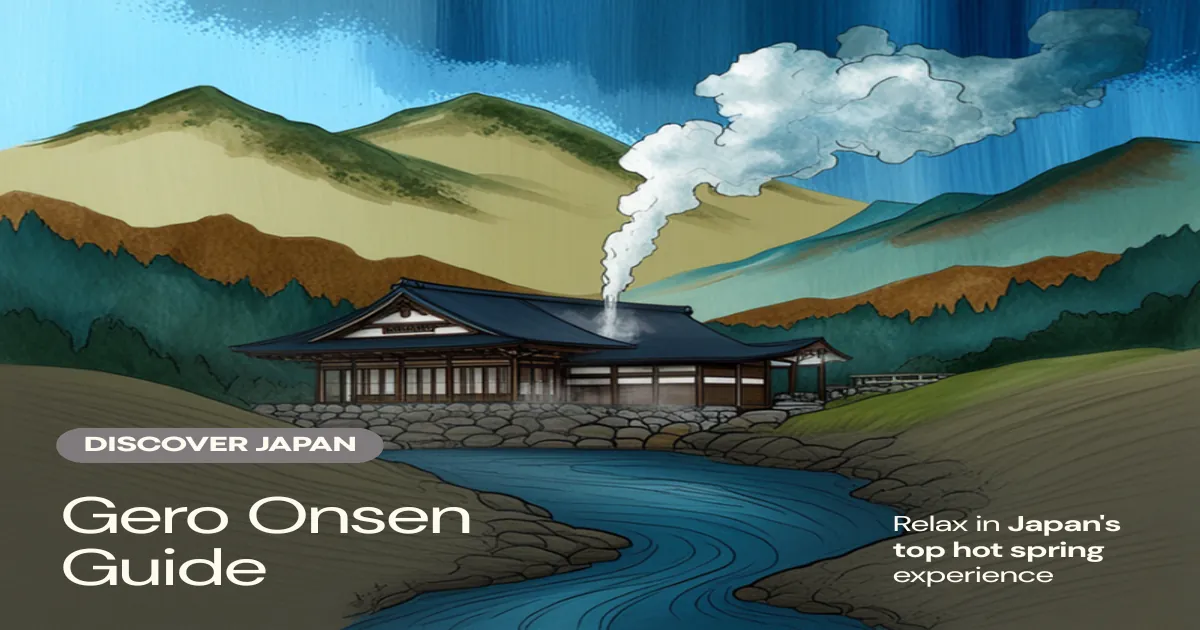
TL;DR: If you have one night, go to Gero Onsen — best value, best water, easiest train (1h40m). If you only have a day, take Gamagori/Nishiura (seaside, 50 min) or Yunoyama (mountain ropeway, 50 min). For a once-in-a-lifetime snowscape, splurge on Okuhida Onsenkyo in winter via the Hida Takayama route.
Central Japan is a hot spring goldmine. Within three hours of Nagoya you can reach one of Japan’s Three Famous Hot Springs, a snow-monkey-style mountain valley, a seaside resort overlooking the Pacific, and a Kintetsu-line ropeway onsen — all without a transfer through Tokyo. This guide ranks the 8 best onsen destinations from Nagoya for 2026, with day-trip versus overnight picks, ryokan recommendations across Booking.com, Agoda and Rakuten Travel, and honest seasonal advice from a 35-year Nagoya local who has been bathing in these springs since childhood.
*Last updated: May 2026 | Author: Yuu (Nagoya-born, 35 years local)*
This article contains affiliate links to Booking.com, Agoda and Rakuten Travel. See our affiliate disclosure for details. I only recommend ryokan and onsen towns I have either visited myself or that local friends and family have used and reported back on. Where I have not personally stayed at a specific ryokan, I say so explicitly.
—
Table of Contents
1. [What makes a “good onsen” near Nagoya](#what-makes-good)
2. [The 8 best onsen destinations from Nagoya](#top-8)
– [Gero Onsen](#gero)
– [Yunoyama Onsen](#yunoyama)
– [Gamagori & Nishiura Onsen](#gamagori)
– [Atsumi Onsen](#atsumi)
– [Hida Takayama Onsen](#takayama)
– [Okuhida Onsenkyo](#okuhida)
– [Toba Onsen](#toba)
– [Hakone (bonus, Mt Fuji route)](#hakone)
3. [Day trip vs overnight: what’s worth it](#day-vs-overnight)
4. [Onsen etiquette for first-timers](#etiquette)
5. [Booking strategy: traditional ryokan vs modern hotel onsen](#booking-strategy)
6. [Best season for onsen in Central Japan](#best-season)
7. [Where to book: Booking.com, Agoda, Rakuten Travel, Jalan](#where-to-book)
8. [FAQ](#faq)
9. [Related guides](#related-guides)
—
What makes a “good onsen” near Nagoya
After three decades of soaking in hot springs across Aichi, Gifu, Mie and Ishikawa, I’ve come to grade them on four practical axes — not romantic ones. If you’ve never read about onsen before, this is the framework I’d give a friend on the phone.
1. Water quality (sen-shitsu)
Japan classifies hot springs by mineral composition. Each type does a different thing to your skin and to how you feel afterward.
– **Alkaline simple springs** (pH 8.5+) — silky, “beauty water” feel, gentle on sensitive skin. Gero Onsen is the textbook example (pH 9.18).
– **Sulfate / chloride springs** — warming, slow to cool down after the bath. Yunoyama Onsen falls here.
– **Sulfur springs** — the classic egg-smell bath, strong on circulation. Okuhida Onsenkyo is famous for this.
– **Carbonate springs** — bubbles cling to your skin, said to be good for the heart.
– **Iron / chloride saline springs** — the brown/rust-colored seaside type, common at Gamagori and Toba.
There is no “best” type — pick by what your skin and travel goals want.
2. Travel time from Nagoya
| Travel time | Fits | Examples |
|————-|——|———-|
| Under 1 hour | Half-day or evening soak | Yunoyama, Gamagori |
| 1 to 2 hours | Easy day trip or one-night | Gero, Toba, Atsumi |
| 2 to 3 hours | Overnight strongly preferred | Hida Takayama, Okuhida |
| 3+ hours | Two-night minimum | Hakone (via Mt Fuji), Kusatsu |
3. Ryokan budget tier
Realistic 2026 prices per person, two meals included:
– **Budget**: ¥12,000–¥18,000 — older family-run ryokan, communal baths only
– **Mid-range**: ¥18,000–¥35,000 — the sweet spot, most international visitors stay here
– **Premium**: ¥35,000–¥60,000 — in-room private bath, premium kaiseki, Hoshino-tier service
– **Luxury**: ¥60,000+ — Aman, Hoshinoya, Wadakura-class
4. English support
Critical for international travelers. Top scorers as of 2026:
– **High English support**: Hoshino Resorts properties, Marriott / IHG / Hilton onsen hotels, Hida Takayama core ryokan
– **Medium**: Major Gero ryokan (Yunoshimakan, Suimeikan, Bosenkan), Toba’s seaview hotels
– **Low**: Family-run Yunoyama and Atsumi ryokan — book via Booking.com with the auto-translated chat function rather than the Japanese-only direct site
—
The 8 best onsen destinations from Nagoya
Here is the ranked list. Number 1 is the highest all-round value. Numbers 2 and 3 are the best day trips. Numbers 4 to 8 are best as overnight picks.
1. Gero Onsen (下呂温泉) — the all-round winner
| Detail | Info |
|---|---|
| Travel time from Nagoya | 1h40m by JR Hida Limited Express (~¥4,500 one way) |
| By car | ~2h via Tokai-Hokuriku Expressway / Route 41 |
| Spring type | Alkaline simple, pH 9.18 |
| Day trip? | Yes — comfortable 5–6h in town |
| Best season | Winter (snow rotenburo), late November (foliage) |
| Vibe | Riverside town, traditional, walkable |
**Why it’s #1.** Gero Onsen is one of Japan’s Nihon Sanmeisen — the Three Famous Hot Springs, alongside Kusatsu (Gunma) and Arima (Hyogo). It’s the only one of the three reachable from Nagoya without changing trains, and the alkaline “beauty water” is the gentlest of the three. After 35 years of bathing all over Japan, Gero is still my personal favorite for a Nagoya-anchored trip — silky water, scenic Hida River setting, and ryokan that have hosted international travelers for decades.
The town runs the Yumeguri Tegata Set (¥2,500), a wooden pass that gets you into 3 of about 20 participating ryokan baths. Free outdoor foot baths line the Hida River — bring a small towel.
**Recommended ryokan**:
– **Yunoshimakan (湯之島館)** — the historic one. 1931-built wooden architecture, surrounded by 50,000 tsubo of forest. Mid- to premium-tier.
– [BOOKING:gero-yunoshimakan] [AGODA:gero-yunoshimakan] [RAKUTEN:gero-yunoshimakan]
– **Suimeikan (水明館)** — the largest, most international-friendly, three buildings on the riverbank. Mid-tier.
– [BOOKING:gero-suimeikan] [AGODA:gero-suimeikan] [RAKUTEN:gero-suimeikan]
– **Bosenkan Yumeoi-no-Yu (望川館)** — riverside views, traditional kaiseki, easy walk from station. Mid-tier.
– [BOOKING:gero-bosenkan] [AGODA:gero-bosenkan] [RAKUTEN:gero-bosenkan]
For the full breakdown including day-trip itineraries, Hida beef restaurants and the Gassho-mura open-air museum, see the dedicated Gero Onsen guide.
—
2. Yunoyama Onsen (湯の山温泉) — the closest mountain onsen
| Detail | Info |
|---|---|
| Travel time from Nagoya | ~50 min by Kintetsu Limited Express + bus |
| By car | ~1h via Higashi-Meihan Expressway |
| Spring type | Radium-bearing alkaline simple (radon spring) |
| Day trip? | Yes — easy half-day with Gozaisho Ropeway |
| Best season | November (foliage on Mt Gozaisho), May (fresh green) |
| Vibe | Forested mountain ravine, small and quiet |
**Why visit.** Yunoyama is the Nagoya office worker’s after-work onsen. It sits at the foot of Mt Gozaisho (1,212m) in northern Mie Prefecture, reachable from Nagoya in well under an hour via the Kintetsu line. According to the Yunoyama Onsen Tourist Association, the spring was discovered in the year 718 by a monk who saw a wounded deer healing in the water (the same legend as half the onsen in Japan, but locals love telling it).
The signature combo is a Gozaisho Ropeway ride to the top of the mountain, then a soak at the base. Foliage season (mid to late November) gets crowded but the colors are spectacular.
**Note on JR Pass**: Yunoyama is on the Kintetsu line, not JR. The JR Pass does not cover this route. Use a Kintetsu Rail Pass or pay the regular fare (~¥1,300 round trip).
**Recommended ryokan**:
– **Yunoyama Onsen Hotel Gozaisho (グリーンホテル)** — large modern hot spring hotel, English-friendly front desk. Mid-tier.
– [BOOKING:yunoyama-greenhotel] [AGODA:yunoyama-greenhotel] [RAKUTEN:yunoyama-greenhotel]
– **Rokurokuso (鹿の湯ホテル / 鹿之湯)** — old-style ryokan with kaiseki, surrounded by maples. Mid-tier.
– [BOOKING:yunoyama-rokurokuso] [AGODA:yunoyama-rokurokuso] [RAKUTEN:yunoyama-rokurokuso]
– **Kotonoyu (寿亭)** — traditional, mountain-stream baths. Mid-tier.
– [BOOKING:yunoyama-kotonoyu] [AGODA:yunoyama-kotonoyu] [RAKUTEN:yunoyama-kotonoyu]
—
3. Gamagori & Nishiura Onsen (蒲郡・西浦温泉) — the seaside escape
| Detail | Info |
|---|---|
| Travel time from Nagoya | ~50 min by JR Tokaido Line (Limited Express ~40 min) |
| By car | ~1h15m via Isewangan Expressway |
| Spring type | Sodium chloride (saltwater hot spring) |
| Day trip? | Yes — easy day round trip, JR-covered |
| Best season | Year-round (great in winter for warm seaside views) |
| Vibe | Pacific Ocean views, resort hotels, romantic |
**Why visit.** Gamagori is on the Mikawa Bay coast in southeastern Aichi — a string of cliffside onsen hotels with open-air baths overlooking the Pacific. Gamagori City Tourism has been promoting this as the “Mediterranean of the Tokai region” for years, and the Nishiura peninsula in particular has a row of hotels where you can soak with the sea horizon at eye level.
The water here is sodium chloride — saline, warming, and slightly salty on the skin. It is a different feel from the alkaline silkiness of Gero. Couples and date trips are the dominant demographic; solo travelers will find it pleasant but quiet.
**Recommended ryokan**:
– **Nishiura Grand Hotel Kifuso (西浦グランドホテル吉慶荘)** — large oceanview baths, the postcard hotel of the area. Mid-tier.
– [BOOKING:nishiura-grand-hotel] [AGODA:nishiura-grand-hotel] [RAKUTEN:nishiura-grand-hotel]
– **Hotel Mikawa Wankan (三河湾ホテル)** — modern Western-style rooms with onsen, English-friendly. Mid-tier.
– [BOOKING:gamagori-mikawa-wankan] [AGODA:gamagori-mikawa-wankan] [RAKUTEN:gamagori-mikawa-wankan]
– **Hotel Taokaen (蒲郡 銀波荘)** — known for the “infinity onsen” outdoor bath that visually merges with the sea. Mid- to premium-tier.
– [BOOKING:gamagori-ginpaso] [AGODA:gamagori-ginpaso] [RAKUTEN:gamagori-ginpaso]
The hotels here are larger and more “resort hotel” than “traditional ryokan” — better fit if you want Western beds and a buffet rather than tatami and futon.
—
4. Atsumi Onsen (渥美温泉) — the southern Aichi peninsula
| Detail | Info |
|---|---|
| Travel time from Nagoya | ~1h40m (Toyohashi by JR + Toyotetsu line + bus) |
| By car | ~1h45m via Tomei Expressway |
| Spring type | Sodium chloride (saline) |
| Day trip? | Possible but tight — overnight is better |
| Best season | Spring (Irago melon farms, ocean breezes) |
| Vibe | Quiet southern peninsula, fishing village atmosphere |
**Why visit.** The Atsumi Peninsula sticks out into the Pacific from the southern tip of Aichi, ending at Cape Irago — about as far from Tokyo’s tourist circuit as you can get while still in central Japan. Fewer tourists, lower prices, fresh seafood (especially fugu and tiger blowfish in winter), and warm coastal onsen water. The trade-off is access: the train is reliable but slow, and a rental car is genuinely useful here.
**Recommended ryokan**:
– **Hotel Yamamizuki (山水園)** — cliff-edge ryokan with private rotenburo rooms, well known regionally. Premium-tier.
– [BOOKING:atsumi-yamamizuki] [AGODA:atsumi-yamamizuki] [RAKUTEN:atsumi-yamamizuki]
– **Yumotokan (湯元館)** — traditional, hot spring source on premises, simple and good. Mid-tier.
– [BOOKING:atsumi-yumotokan] [AGODA:atsumi-yumotokan] [RAKUTEN:atsumi-yumotokan]
– **Irago Garden Hotel (伊良湖ガーデンホテル)** — resort hotel with onsen, golf course, sea views. Mid-tier.
– [BOOKING:atsumi-irago-garden] [AGODA:atsumi-irago-garden] [RAKUTEN:atsumi-irago-garden]
Best paired with a fugu winter dinner — locals come down here in January and February specifically for it.
—
5. Hida Takayama Onsen (飛騨高山温泉) — the cultural overnight
| Detail | Info |
|---|---|
| Travel time from Nagoya | ~2h20m by JR Hida Limited Express |
| By car | ~2h30m via Tokai-Hokuriku Expressway |
| Spring type | Alkaline simple (varies by ryokan source) |
| Day trip? | Possible but a waste — go overnight |
| Best season | Winter (snow), April (Takayama Spring Festival), October (autumn festival) |
| Vibe | Edo-period preserved town, sake breweries, mountain culture |
**Why visit.** Takayama isn’t an “onsen town” the way Gero is — it’s a preserved Edo-period market town in the Hida mountains where many of the ryokan happen to have hot spring baths. According to Hida Takayama Tourism, the city’s hot springs were developed relatively recently (1990s onward) using deep bore wells, but the water quality is real alkaline simple spring and the cultural experience around the bath — morning markets, sake tastings, Hida beef sushi — is the actual draw.
This is the move if your trip priority is “real Japan” rather than “soak for the sake of soaking.”
**Recommended ryokan**:
– **Honjin Hiranoya Kachoan (本陣平野屋花兆庵)** — premium, frequently top-ranked Takayama ryokan, intimate kaiseki. Premium-tier.
– [BOOKING:takayama-hiranoya-kachoan] [AGODA:takayama-hiranoya-kachoan] [RAKUTEN:takayama-hiranoya-kachoan]
– **Wanosato (鄙の里 和の里)** — thatched-roof hideaway 15 min outside the city. Premium-tier, very atmospheric.
– [BOOKING:takayama-wanosato] [AGODA:takayama-wanosato] [RAKUTEN:takayama-wanosato]
– **Ryokan Asunaro (旅館あすなろ)** — central location, easy access to old town, good mid-tier value. Mid-tier.
– [BOOKING:takayama-asunaro] [AGODA:takayama-asunaro] [RAKUTEN:takayama-asunaro]
Pair with the Takayama and Shirakawa-go day trip guide — an overnight in Takayama plus a half-day at Shirakawa-go is the standard high-value loop from Nagoya.
—
6. Okuhida Onsenkyo (奥飛騨温泉郷) — the snow monkey vibe
| Detail | Info |
|---|---|
| Travel time from Nagoya | ~3h30m (JR Hida to Takayama + Nohi Bus to Hirayu) |
| By car | ~3h via Tokai-Hokuriku + Route 158 |
| Spring type | Sulfur, calcium-sodium chloride (varies by village) |
| Day trip? | No — overnight only |
| Best season | Winter (snow rotenburo), summer (cool mountain escape) |
| Vibe | Five hot spring villages in alpine valley, deeply rural |
**Why visit.** Okuhida is a cluster of five hot spring villages — Hirayu, Fukuji, Shin-Hirayu, Tochio, and Shin-Hotaka — along the mountain roads on the way to the Northern Alps. According to the Okuhida Onsenkyo Tourism Association, the area has the highest concentration of outdoor rotenburo in Japan, and many of them are open-air, free, and surrounded by snow in winter.
This is the “Instagram snow rotenburo” Japan you’ve seen. It’s a long trek from Nagoya, but it pays off. The Shinhotaka Ropeway goes up to 2,156m for 360-degree Alps views, and a soak afterward is the classic local routine.
**Recommended ryokan**:
– **Hodakaso Yamano Hotel (穂高荘 山のホテル)** — Hirayu Onsen, with one of the largest mixed open-air baths in Japan. Mid- to premium-tier.
– [BOOKING:okuhida-hodakaso] [AGODA:okuhida-hodakaso] [RAKUTEN:okuhida-hodakaso]
– **Yarimikan (槍見舘)** — Shin-Hotaka, riverside rotenburo facing the Yari peak. Premium-tier, often booked out months ahead.
– [BOOKING:okuhida-yarimikan] [AGODA:okuhida-yarimikan] [RAKUTEN:okuhida-yarimikan]
– **Hirayu no Mori (ひらゆの森)** — budget pick, day-use baths plus simple lodge accommodation. Budget-tier.
– [BOOKING:okuhida-hirayu-no-mori] [AGODA:okuhida-hirayu-no-mori] [RAKUTEN:okuhida-hirayu-no-mori]
Plan the Nohi Bus connection from Takayama Bus Center to Hirayu Onsen carefully — winter schedules thin out and you do not want to miss the last bus.
—
7. Toba Onsen (鳥羽温泉) — the Ise pearl coast
| Detail | Info |
|---|---|
| Travel time from Nagoya | ~1h45m by Kintetsu Limited Express (~¥3,500 one way) |
| By car | ~2h via Ise Expressway |
| Spring type | Sodium chloride (seaside saline) |
| Day trip? | Yes, but overnight pairs perfectly with Ise Shrine |
| Best season | Winter (lobster season), summer (beach + onsen combo) |
| Vibe | Pearl harbor town, Mikimoto, ferry hub to Toba islands |
**Why visit.** Toba is the port town just past Ise on the Shima peninsula, famous for Mikimoto Pearl Island and the Toba Aquarium. The hot spring resort hotels overlook Toba Bay, and many feature open-air baths with a direct view of Mikimoto Pearl Island and the harbor lights at night.
The natural pairing is Ise Jingu first, Toba onsen and dinner second. Ise lobster (ise-ebi) and abalone are the local specialties, both peaking November to February.
**Recommended ryokan**:
– **Toba Seaside Hotel (鳥羽シーサイドホテル)** — large oceanfront resort with multiple bath types. Mid-tier.
– [BOOKING:toba-seaside-hotel] [AGODA:toba-seaside-hotel] [RAKUTEN:toba-seaside-hotel]
– **Toba Kowakien (鳥羽小涌園)** — modern, English-friendly, family-room-friendly. Mid-tier.
– [BOOKING:toba-kowakien] [AGODA:toba-kowakien] [RAKUTEN:toba-kowakien]
– **Toba International Hotel Shiosai (鳥羽国際ホテル 潮路亭)** — premium hilltop ryokan, frequent honeymoon pick. Premium-tier.
– [BOOKING:toba-shiosai] [AGODA:toba-shiosai] [RAKUTEN:toba-shiosai]
See the dedicated Ise Grand Shrine day trip guide for how to chain Ise Jingu, Okage Yokocho, and a Toba overnight in 36 hours.
—
8. Hakone Onsen (箱根温泉) — bonus: the Mt Fuji route
| Detail | Info |
|---|---|
| Travel time from Nagoya | ~2h40m (Shinkansen to Odawara + Hakone Tozan line) |
| By car | ~3h30m (only worth it if combining with Mt Fuji) |
| Spring type | Mixed — 17 different sources across the area |
| Day trip? | Possible from Nagoya but exhausting — overnight only |
| Best season | Year-round, especially clear winter days for Fuji views |
| Vibe | Polished international resort, Mt Fuji backdrop |
**Why I list it as bonus.** Hakone is technically Kanto, not Chubu. But if you’re already taking the shinkansen east from Nagoya — perhaps to Tokyo, perhaps to see Mt Fuji — Hakone is the natural overnight stop. Hakone Tourism is the most internationally optimized hot spring destination in Japan, with English signage, multilingual ryokan staff, and ticket products built around foreign visitors (the Hakone Free Pass).
If your priority is Mt Fuji + onsen, this is the route. If your priority is “best value from Nagoya,” Hakone is too far — pick Gero or Hida Takayama instead.
**Recommended ryokan**:
– **Gora Kadan (強羅花壇)** — luxury former imperial villa, members-club-style service. Luxury-tier.
– [BOOKING:hakone-gora-kadan] [AGODA:hakone-gora-kadan] [RAKUTEN:hakone-gora-kadan]
– **Hakone Yutowa (箱根ゆとわ)** — modern boutique, design-forward, easier pricing. Mid-tier.
– [BOOKING:hakone-yutowa] [AGODA:hakone-yutowa] [RAKUTEN:hakone-yutowa]
– **Hakone Kowakien Tenyu (箱根小涌園 天悠)** — newer resort with all-room private hot spring terraces. Premium-tier.
– [BOOKING:hakone-kowakien-tenyu] [AGODA:hakone-kowakien-tenyu] [RAKUTEN:hakone-kowakien-tenyu]
—
Day trip vs overnight: what’s worth it
The single biggest decision is whether to commit to an overnight ryokan stay or just bath-hop for an afternoon. Here is the honest comparison.
| Factor | Day trip (higaeri) | Overnight (ippaku) |
|---|---|---|
| Cost per person | ¥6,000–¥10,000 (transport + day-use bath + lunch) | ¥18,000–¥40,000 (everything included) |
| Number of baths | 1–3 (e.g., Yumeguri Tegata) | 3–6 (evening, late night, morning, multiple types) |
| Dinner | Restaurant lunch, no kaiseki | Multi-course kaiseki at the ryokan |
| Sleep | Back home in Nagoya same night | Tatami room, futon on the floor |
| Cultural depth | Surface-level | Full ryokan experience: yukata, tea ceremony, breakfast |
| Best for | Yunoyama, Gamagori, day-tripping to Gero | Hida Takayama, Okuhida, Toba, premium Gero |
My honest take after years of doing both: **if you have only one onsen experience in your whole Japan trip, make it overnight.** The kaiseki dinner, the late-night soak after everyone else has gone to bed, and the morning bath before breakfast are the parts that imprint. A day trip is a lukewarm version of the same idea.
If your time is genuinely tight, day-trip Yunoyama or Gamagori — they’re 50 minutes out, you’re back in Nagoya for dinner, and you’ve technically done it.
—
Onsen etiquette for first-timers
Most international visitors I’ve taken to onsen worry about doing something wrong. Here’s the short version of what actually matters.
The 7 rules that matter
1. **Wash before you enter the bath.** Shower stations with stools and removable hoses are inside the bathing room. Soap, rinse, soap again, rinse — clean before you soak.
2. **No swimsuits.** Onsen are nude. Towel placement is up to you, but most people drape a small towel over their head or set it on the edge of the bath. Don’t put the towel in the water.
3. **Tie up long hair.** Hair in the bathwater is the cardinal sin. A hair tie or rubber band is mandatory.
4. **Tattoo policy varies.** Many traditional ryokan still ban tattoos in shared baths. Increasingly common workarounds: book a room with a private bath (kashikiri buro), choose a tattoo-friendly facility, or bring waterproof tattoo cover stickers (some ryokan provide them at the front desk on request).
5. **Quiet voices.** You can chat with friends but loud conversation, splashing, or swimming is out. The vibe is closer to a library than a swimming pool.
6. **Phones stay in the locker.** No photos in the bathing area. Ever.
7. **Drink water before and after.** A 40°C bath for 15 minutes is dehydrating. Most ryokan have a water cooler in the changing area for exactly this reason.
What about mixed bathing (konyoku)?
Genuine mixed bathing is increasingly rare in 2026. Most “konyoku” baths today either issue rental yu-amaki wraps for women or operate gender-segregated time slots. Okuhida and parts of Hida are the last regions where traditional mixed bathing is still common at small mountain ryokan — if you specifically want or want to avoid it, ask at booking time.
Tattoo-friendly onsen near Nagoya in 2026
A non-exhaustive starting list (always reconfirm with the ryokan before paying):
– Most **Hoshino Resorts** properties (e.g., KAI Alps in Okuhida)
– **Hirayu no Mori** in Okuhida (private rotenburo are tattoo-OK)
– Several Gero ryokan with private kashikiri baths — **Yunoshimakan** is generally accommodating
– Hotel onsen at major chains (Marriott, Hilton, IHG) where the spa is private/timed-rental
—
Booking strategy: traditional ryokan vs modern hotel onsen
The two formats deliver very different experiences. Here’s how I’d choose between them.
Traditional ryokan (旅館)
– Tatami floors, futon laid out by staff while you eat dinner
– Kaiseki dinner served in your room or a private dining room
– Yukata robes provided and used as outdoor wear in town (especially in Gero, Hida Takayama)
– Okami (female head of house) culture — staff anticipate needs, room service is fluid
– Communal hot spring baths, sometimes with private kashikiri rotenburo to reserve
– Higher cultural payoff, less flexibility (set dinner time, set meal courses)
Modern hotel onsen
– Western beds, closer to a regular hotel experience
– Buffet, a la carte, or restaurant dining — pick your time
– Bath floor accessed by elevator and yukata, often coed-floor baths with separate changing rooms
– Easier for families with children, travelers with mobility needs, and tattooed guests (private timed baths are the norm)
– Less cultural depth but more practical for short or first-time trips
How to find good ones on Booking.com
Pick the destination, then filter by:
– **Property type**: Ryokan
– **Facilities**: Hot spring, Spa
– **Review score**: 8.5+ (the ryokan field skews high — under 8.0 in this category usually means real problems)
– **Free cancellation**: yes (most do offer it 7+ days out)
Then read the most recent 5 reviews specifically — onsen ryokan staff and food quality fluctuate, and a review from 18 months ago may not reflect 2026 reality.
—
Best season for onsen in Central Japan
Hot spring travel has clear seasons, and the answer is more nuanced than “winter is best.”
| Month | What’s good | What to watch out for |
|——-|————-|———————–|
| **January** | Snow rotenburo at Okuhida and Hida Takayama; fugu season at Atsumi/Toba | Train delays from heavy snow on the Hida line |
| **February** | Coldest air = warmest baths feel best; lobster (ise-ebi) peak | Same as January |
| **March** | Plum blossoms in Gifu, late-season snow in mountains | “Shoulder season” prices |
| **April** | Cherry blossoms in Gero, Takayama Spring Festival (April 14–15) | Festival weeks book out 4–6 months ahead |
| **May** | Fresh green (shinryoku) in Yunoyama, Korankei | Golden Week (April 29–May 5) is peak everything |
| **June** | Hydrangeas, fewer crowds | Rainy season (tsuyu) |
| **July–August** | Okuhida summer escape, fireworks at Gamagori | Hot and humid, indoor baths feel less special |
| **September** | Shoulder season, low prices | Typhoon risk |
| **October** | Takayama Autumn Festival (October 9–10), early foliage | Festival weeks book out |
| **November** | Peak foliage at Korankei, Yunoyama, Gero | Mid-November weekends are crowded |
| **December** | First snow, Christmas at Hoshino properties | New Year’s Eve premium pricing |
**My personal favorite combo:** late November weekday at Gero (foliage, pre-crowd, cool but not freezing). **My runner-up:** late January at Okuhida (heavy snow, full rotenburo experience, fewer international visitors than peak winter).
—
Where to book: Booking.com, Agoda, Rakuten Travel, Jalan
Each platform has a different sweet spot. I use all four for different types of trip, even as a Japan resident.
| Platform | Best for | Drawbacks |
|---|---|---|
| Booking.com | English UI, free cancellation defaults, easy international cards | Slightly fewer small ryokan listings; price sometimes 3–8% higher than Rakuten |
| Agoda | Asia-Pacific market, member rates often 5–10% off, secret deals | Cancellation rules vary widely by listing; less small-ryokan coverage than Rakuten |
| Rakuten Travel | Most comprehensive ryokan inventory, best prices on traditional small properties | Mixed Japanese/English UI; loyalty program biased toward Rakuten ID holders |
| Jalan (じゃらん) | Domestic Japan resident pricing, strongest plan packages (e.g., kaiseki + lobster supplement bundles) | Largely Japanese only; international cards sometimes blocked |
My booking workflow
1. **Find candidates on Booking.com** — easiest English search, shortlist 3–4 ryokan by review score and location
2. **Cross-check on Agoda** — sometimes 5–10% cheaper for the exact same room
3. **Cross-check on Rakuten Travel** — for traditional ryokan, often the lowest direct rate
4. **Book on whichever is cheapest with free cancellation** — and re-check 7 days before arrival; rates often drop further
For first-time international visitors, Booking.com is the simplest end-to-end answer. The 3–8% price premium is worth it for the sane cancellation policy and English customer service.
—
Sample 2-night onsen itineraries from Nagoya
To make this concrete, here are three template trips I’ve actually planned for visiting friends.
Itinerary A: Classic onsen weekend (best value)
– **Day 1**: Nagoya morning → JR Hida Limited Express (1h40m) → Gero Onsen check-in 14:00 → Yumeguri Tegata 3-bath circuit → kaiseki dinner at ryokan → late-night rotenburo
– **Day 2**: Morning bath → ryokan breakfast → optional Gassho-mura museum → Hida beef lunch → return train 16:30 → Nagoya 18:10
– **Total cost (mid-range ryokan)**: ~¥35,000 per person all-in
Itinerary B: Snow + culture (winter only)
– **Day 1**: Nagoya 07:43 → JR Hida → Takayama 10:03 → morning market + sake brewery tour → Hida beef lunch → Nohi Bus to Hirayu Onsen 16:00 → snow rotenburo + kaiseki
– **Day 2**: Shin-Hotaka Ropeway morning → return to Hirayu → afternoon bus to Takayama → Takayama overnight at Hiranoya Kachoan
– **Day 3**: Takayama old town stroll → JR Hida back to Nagoya 14:30
– **Total cost (premium ryokan)**: ~¥85,000 per person all-in
Itinerary C: Sea + shrine (Mie route)
– **Day 1**: Nagoya morning → Kintetsu Limited Express → Ise 09:30 → Geku → Naiku → Okage Yokocho lunch → train to Toba 15:00 → Toba Aquarium → onsen check-in
– **Day 2**: Mikimoto Pearl Island morning → Toba Bay ferry ride → afternoon kaiseki lunch → Kintetsu back to Nagoya
– **Total cost (mid-range ryokan)**: ~¥40,000 per person all-in
—
FAQ
Q1. What is the best onsen near Nagoya for first-time visitors?
**Gero Onsen** in Gifu Prefecture. It is one of Japan’s Three Famous Hot Springs, reachable in 1 hour 40 minutes by JR Hida Limited Express, and the alkaline water (pH 9.18) is the gentlest of the three. Day trip and overnight options both work, ryokan are used to international guests, and the riverside town is small enough to walk in an afternoon.
Q2. Can I do an onsen day trip from Nagoya?
Yes. Yunoyama Onsen (50 minutes via Kintetsu) and Gamagori/Nishiura Onsen (50 minutes via JR Tokaido) are the easiest same-day round trips. Gero Onsen works too with the JR Hida Limited Express (1h40m each way), giving you 5 to 6 hours in town. For Hida Takayama and Okuhida you really need to stay overnight.
Q3. Is the JR Pass useful for onsen trips from Nagoya?
Yes for Gero, Hida Takayama, Okuhida and Toba (covered by JR or by JR plus the Takayama-Hokuriku Area Tourist Pass). Yunoyama Onsen is on the Kintetsu line and is not JR Pass eligible. Gamagori is a short JR Tokaido hop and works with the pass.
Q4. Are tattoos allowed in onsen near Nagoya?
Most large traditional ryokan still restrict tattoos in shared baths, but private baths (kashikiri buro) and tattoo-friendly facilities are increasingly common. Hoshino Resorts properties, several Okuhida ryokan, and most modern hotel onsen accept tattooed guests in private rooms. Always check the ryokan’s English page or contact Booking.com customer service before paying.
Q5. How much does an overnight ryokan stay near Nagoya cost?
Mid-range ryokan with two meals (kaiseki dinner and breakfast) run roughly ¥18,000 to ¥35,000 per person per night. Premium ryokan in Gero, Hida Takayama and Okuhida go to ¥50,000 to ¥80,000. Budget options exist around ¥12,000 to ¥16,000 but typically without the elaborate dinner. Booking.com and Rakuten Travel show full prices including taxes.
Q6. What is the best season for onsen near Nagoya?
Winter (December to February) is the most atmospheric — snow-covered outdoor baths (yukimi-buro) are an iconic Japanese experience and Okuhida and Hida Takayama are spectacular under snow. Autumn (mid-November) brings red foliage to Korankei, Yunoyama, and Gero. Spring cherry blossoms peak early April. Summer is the off-season for onsen but gives you the cheapest rates.
Q7. Should I book ryokan on Booking.com or Rakuten Travel?
Booking.com has the better English interface and free cancellation on most properties — easier for international visitors. Rakuten Travel and Jalan often have slightly lower prices and more traditional ryokan listings, but the booking flow is partly Japanese. Agoda is a strong middle ground with English support and competitive pricing for the Asia-Pacific market.
Q8. What is the difference between a traditional ryokan and a hotel onsen?
A traditional ryokan (旅館) has tatami rooms, futon bedding, in-room kaiseki dinner or banquet hall service, and a host culture (okami) where the staff anticipate your needs. A hotel onsen has Western beds, buffet or a la carte dining, and a check-in counter — easier if you want flexibility but less culturally immersive. Both have communal hot springs.
Q9. Can I visit an onsen without staying overnight?
Yes. Most ryokan offer higaeri nyuyoku (day-use bathing) for ¥800 to ¥2,000 during specific afternoon hours, typically 11:00 to 15:00. Public bathhouses (sento) and the Yumeguri Tegata pass system at Gero Onsen also let you sample multiple baths in one day.
Q10. How long should I stay at an onsen ryokan?
One night is enough for the full kaiseki dinner, two or three baths, and a leisurely breakfast — most international visitors do exactly that. Two nights only makes sense if you also want to explore the surrounding region (Hida beef breweries near Takayama, the Okuhida ropeway, the Ise Shrines from Toba).
—
About the author
I’m **Yuu**, born and raised in Nagoya for the past 35 years. I worked at a Tokyo-headquartered company that posted me to its Nagoya branch in Sakae, which means I have spent a lot of weekends escorting visiting friends and family through the onsen routes listed above. Gero is my personal go-to — I’ve been bathing there since childhood and the alkaline water has spoiled me for everywhere else.
For the destinations I haven’t lived in (Okuhida and the rural Atsumi peninsula in particular), the recommendations on this page are based on operator-provided data, official tourism association sources, and reports back from local friends and family who have stayed at the specific properties named. Where I am not 100% sure of a current detail, I say so, and I link to the operator’s official page so you can confirm before paying.
I’m not affiliated with Booking.com, Agoda, Rakuten Travel or any individual ryokan. Read more about my background on the [About page](/about/).
—
Related guides
– Gero Onsen complete guide — full breakdown of Japan’s Three Famous Hot Springs visit from Nagoya
– Takayama & Shirakawa-go day trip — pair with a Hida Takayama or Okuhida overnight
– Ise Grand Shrine day trip — natural pairing with Toba Onsen
– Best day trips from Nagoya — the master list, including the non-onsen options
– JR Pass guide for Central Japan — the Takayama-Hokuriku Area Pass that covers Gero, Takayama and Toyama
– Japan travel essentials for Central Japan — packing, etiquette, money, SIM
– Where to stay in Nagoya — your home base for onsen day trips
—
*Affiliate disclosure: This article includes affiliate links to Booking.com, Agoda, Rakuten Travel and other partners. If you book via these links we earn a small commission at no extra cost to you. We only recommend ryokan and onsen towns we’d send our own friends and family to. See our full [affiliate disclosure](/affiliate-disclosure/) for details.*