Hisaya-odori Garden Flarie is a free urban garden in central Nagoya, three minutes south of Yabacho Subway Station and ten minutes’ walk from Osu Shopping Street. It opened in 1998 as Ran no Yakata, an orchid-themed park, and reopened in 2014 as a multi-themed garden built around three named courts — Garden Court, Crystal Court, and Glass Court — with a koi pond, a colonnade, and a year-round program of seasonal flowers. Locals know it as “the place you didn’t know was right there” — a quiet pocket of greenery hidden in plain sight, one block off the city’s busiest shopping arcade. This guide covers the highlights, the walking route from Osu via Matsuya Coffee, opening hours, and the season-by-season visitor’s playbook, written by a 35-year Nagoya native who walked it on a May morning with an iced coffee in hand.
TL;DR — Why visit Flarie
- Free admission, 09:00–17:30, no tickets.
- 3 minutes from Yabacho Station, 10 minutes from Osu Shopping Street — the perfect 30-minute decompression after the arcade.
- Best season: May (rose arches) and November (autumn metasequoia). The pond reflections are gorgeous year-round in the first morning hour.
- The signature local move: buy an iced coffee at Matsuya Coffee Honten in Osu, walk 10 minutes east, drink it on a pond-side bench.
Last updated: May 10, 2026 | Written by Yuu, a Nagoya native of 35 years
This article may contain affiliate links. See our affiliate disclosure for details.
Table of Contents
- What Is Flarie? From Ran no Yakata to a Free Public Garden
- Hours, Admission, and Closed Days
- How to Get There: Subway, Bus, and the Walk from Osu
- Highlight 1: The Rose Arches in May
- Highlight 2: The Three Courts and the Koi Pond
- Highlight 3: The Crystal Court and Colonnade
- Cafes, Restaurants, and Shops Inside Flarie
- The Local’s Walking Route: Osu → Matsuya Coffee → Flarie
- Visitor Tips and FAQ
- About the Author
- Related Guides
What Is Flarie? From Ran no Yakata to a Free Public Garden
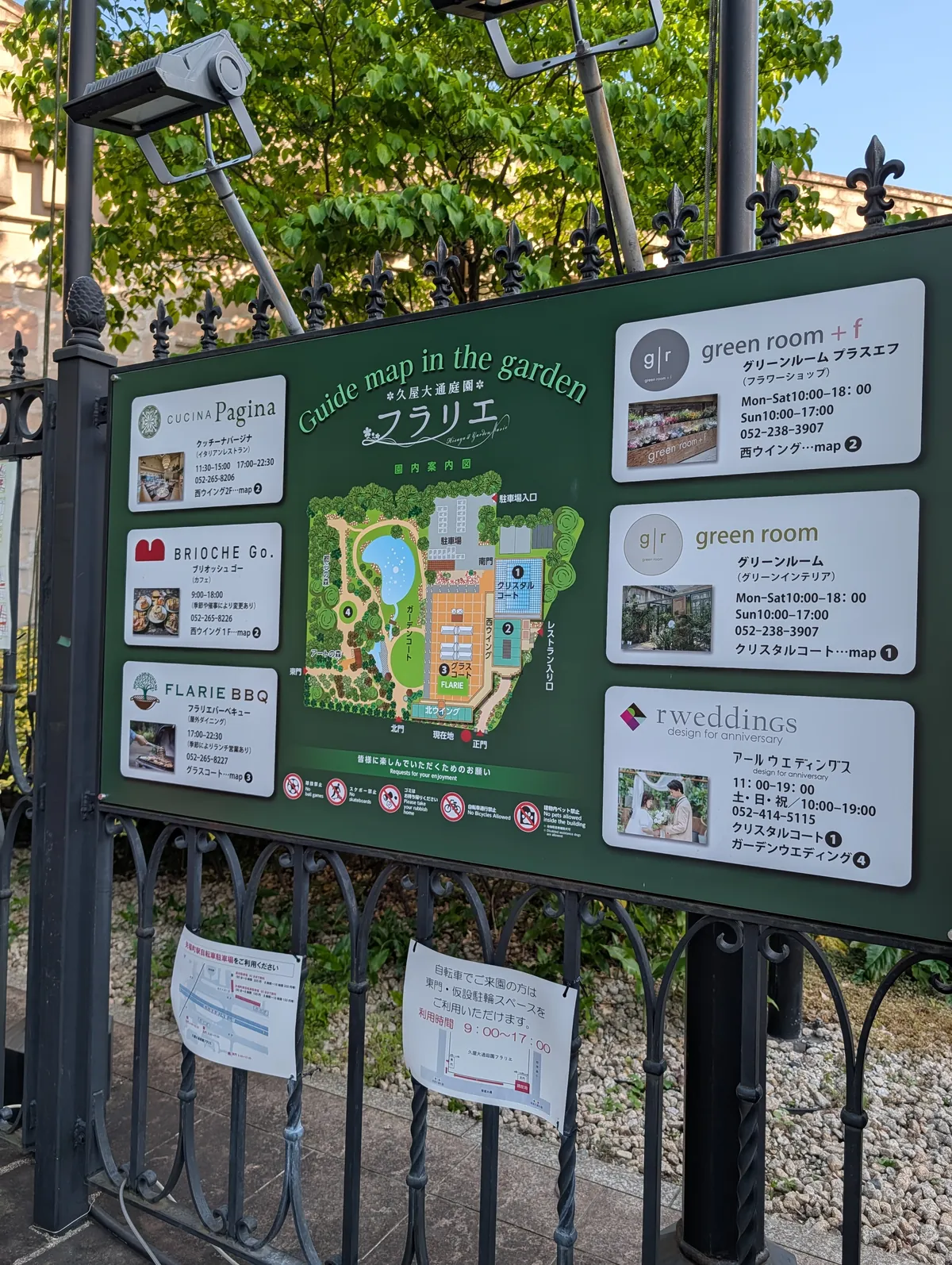
Hisaya-odori Garden Flarie (久屋大通庭園フラリエ) is a public garden in Naka Ward, Nagoya, immediately south of Yabacho Subway Station and at the southern end of Hisaya-odori Park. It is structured as three named courts — Garden Court, Crystal Court, and Glass Court — connected by walkways, with a koi pond, a cafe, an Italian restaurant, a flower shop, and an air-plant specialty shop on site.
Source: Nagoya City Greenery Association — Hisaya-odori Garden Flarie. Court structure (Garden Court, Crystal Court, Glass Court) and on-site facilities.
The site has a story. In May 1998, it opened as Ran no Yakata (ランの館) — a small theme park dedicated to orchids. According to Wikipedia, the original facility was modeled on a European-style residence with a Spanish-influenced patio and a glass atrium inspired by London’s Crystal Palace. It received the Japanese Ministry of Land, Infrastructure, Transport and Tourism’s Handmade Regional Award in 2000.
Visitor numbers, however, never quite met expectations. After a 2011 municipal business review, Ran no Yakata closed on March 31, 2014.
Source: Hisaya-odori Garden Flarie — Wikipedia. Ran no Yakata’s opening, architectural concept, 2000 award, and 2014 closure.
The City of Nagoya then repositioned the site as a public garden and reopened it on September 27, 2014 as Hisaya-odori Garden Flarie. The current operator, listed on the official site, is the designated manager Your Flarie Planners.
Source: Hisaya-odori Garden Flarie — Official Site, About Us. Designated manager (Your Flarie Planners), reopening details.
Where the name comes from
“Flarie” is a coined word, chosen by public competition, that fuses three ideas:
- furari (Japanese for “to drop in casually”)
- flower
- atelier
The whole point of the rebrand is right there: “a flower atelier you can drop into casually.”
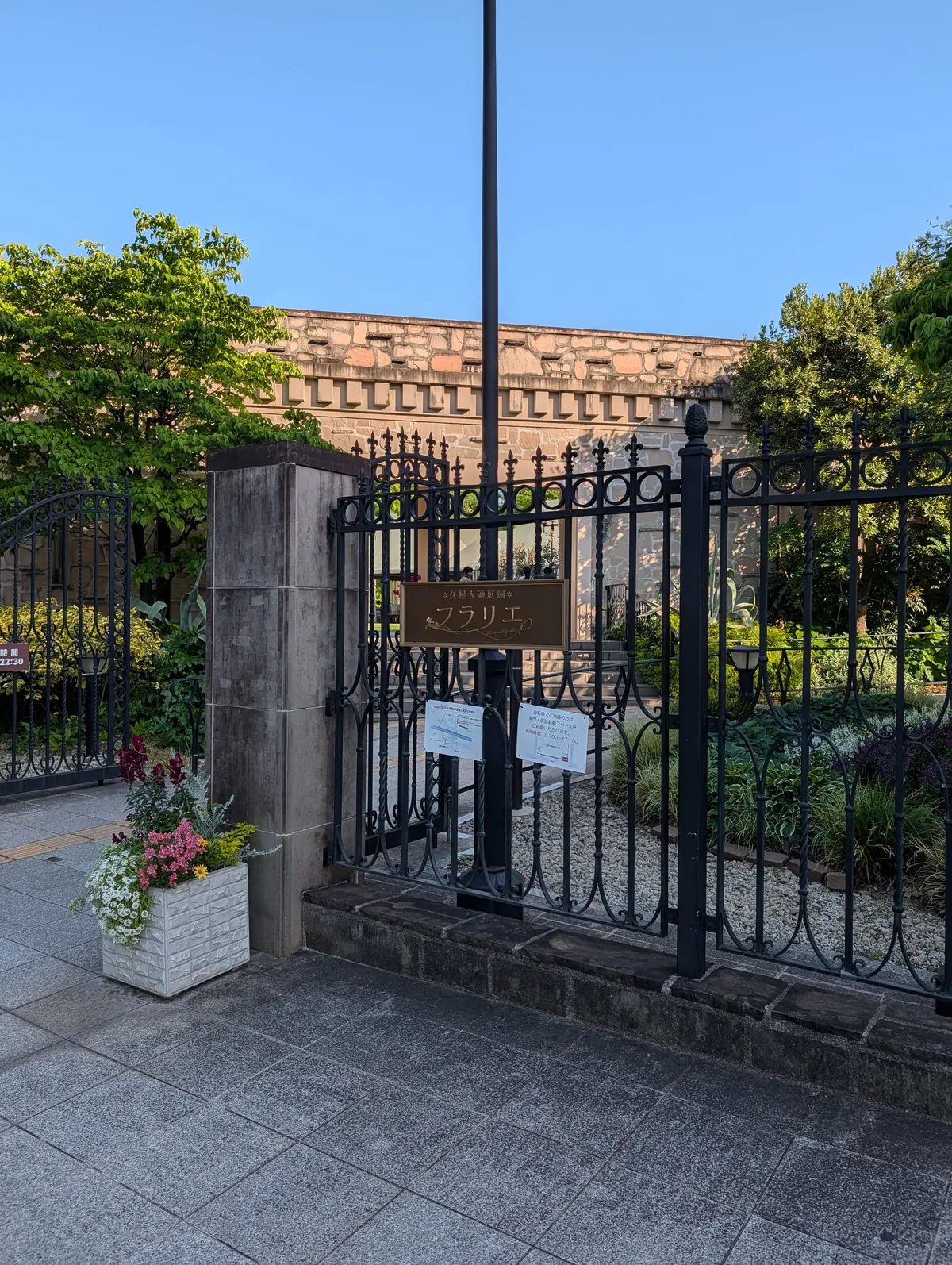
The orchid theme is gone — today’s Flarie features roses, herbs, perennials, succulents, water plants, and seasonal annuals across the three courts. But the architectural bones of the original — the colonnade, the wrought iron, and the Crystal Court atrium — are the same shell as 1998. If you remember Ran no Yakata, the place still feels like the same building wearing different clothes.
Hours, Admission, and Closed Days
| Item | Details |
|---|---|
| Admission | Free |
| Hours | 09:00 – 17:30 |
| Closed | Garden: December 29 – January 3 (year-end / New Year). Individual shops set their own holidays. Plus occasional maintenance days. |
| Address | 4-4-1 Osu, Naka-ku, Nagoya 460-0011 |
| Phone | 052-243-0511 |
| Operator | Designated manager: Your Flarie Planners |
| Official site | https://www.flarie.jp/ |
Source: Hisaya-odori Garden Flarie — Official Site, Visitor Information. Hours, closed days, free admission, designated manager.
The truly unusual thing here is the free part. Central-Nagoya attractions where you can drop in for five minutes and not feel pressured to “use the ticket fully” are rare. Flarie has no ticket booth, no bag check, and no time stamp.
How to Get There: Subway, Bus, and the Walk from Osu
By subway
- Yabacho Station (Meijo Line), Exit 4 — 3 minutes south on foot.
- Kamimaezu Station (Meijo / Tsurumai Lines), Exit 1 — 5 minutes north on foot.
By bus
- C-758 city loop bus from Nagoya Station — about 25 minutes to “Yabacho (Flarie)” stop.
Source: Hisaya-odori Garden Flarie — Official Site, Access. Subway exits, bus times, on-site parking rates.
By car
An 18-space Meitetsu Kyosho Parking is on-site (¥200 / 30 min daytime, ¥100 / 60 min at night). It fills up quickly during weekend events, so subway is the better default.
On foot from Osu, Sakae, and Mirai Tower
- From Osu Shopping Street (Manshouji-dori entrance): about 10 minutes
- From Sakae Station: about 12 minutes
- From Mirai Tower (Chubu Electric MIRAI TOWER): about 15 minutes
If you are already exploring central Nagoya on foot, you are essentially right next door.
Highlight 1: The Rose Arches in May
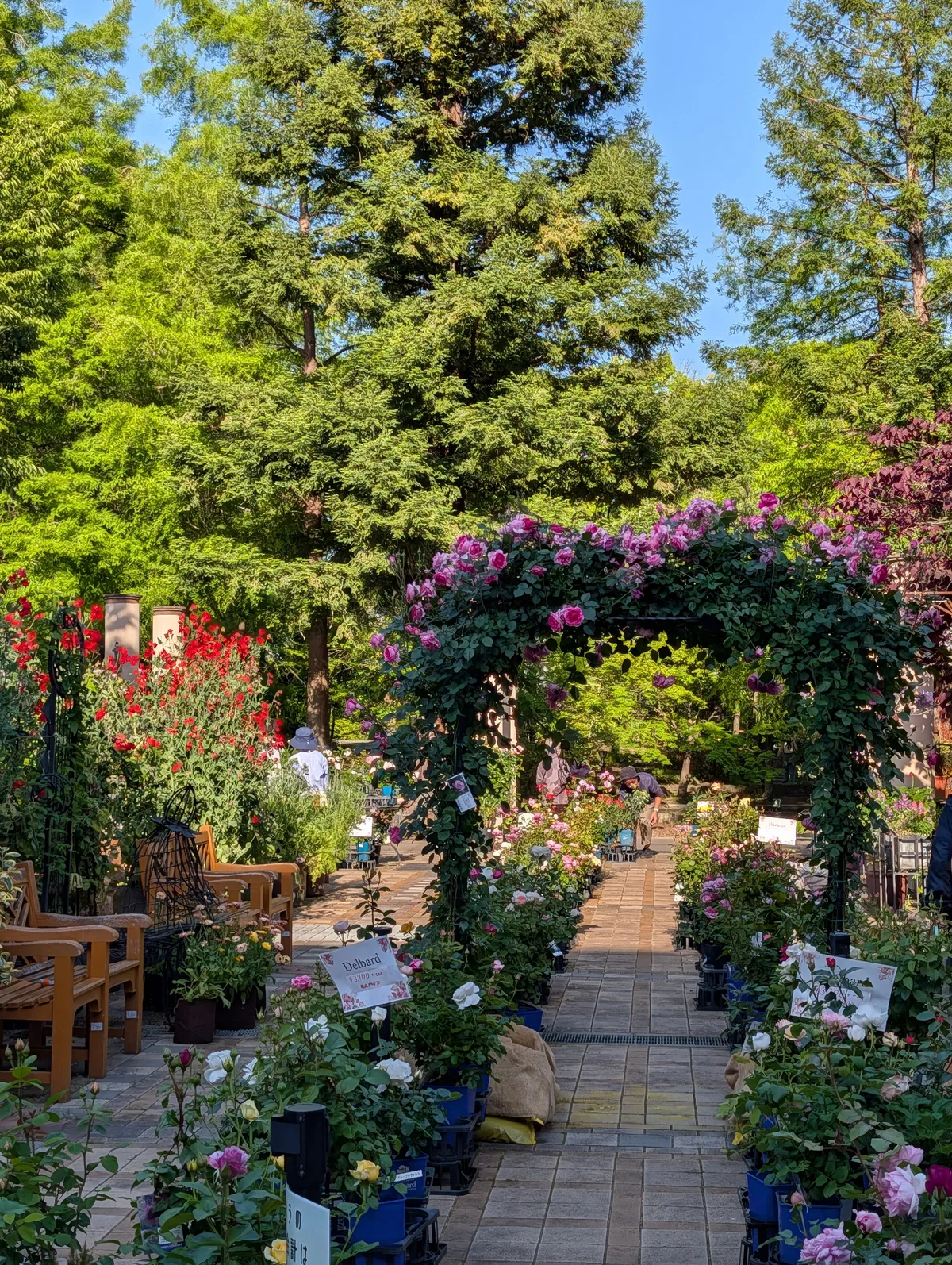
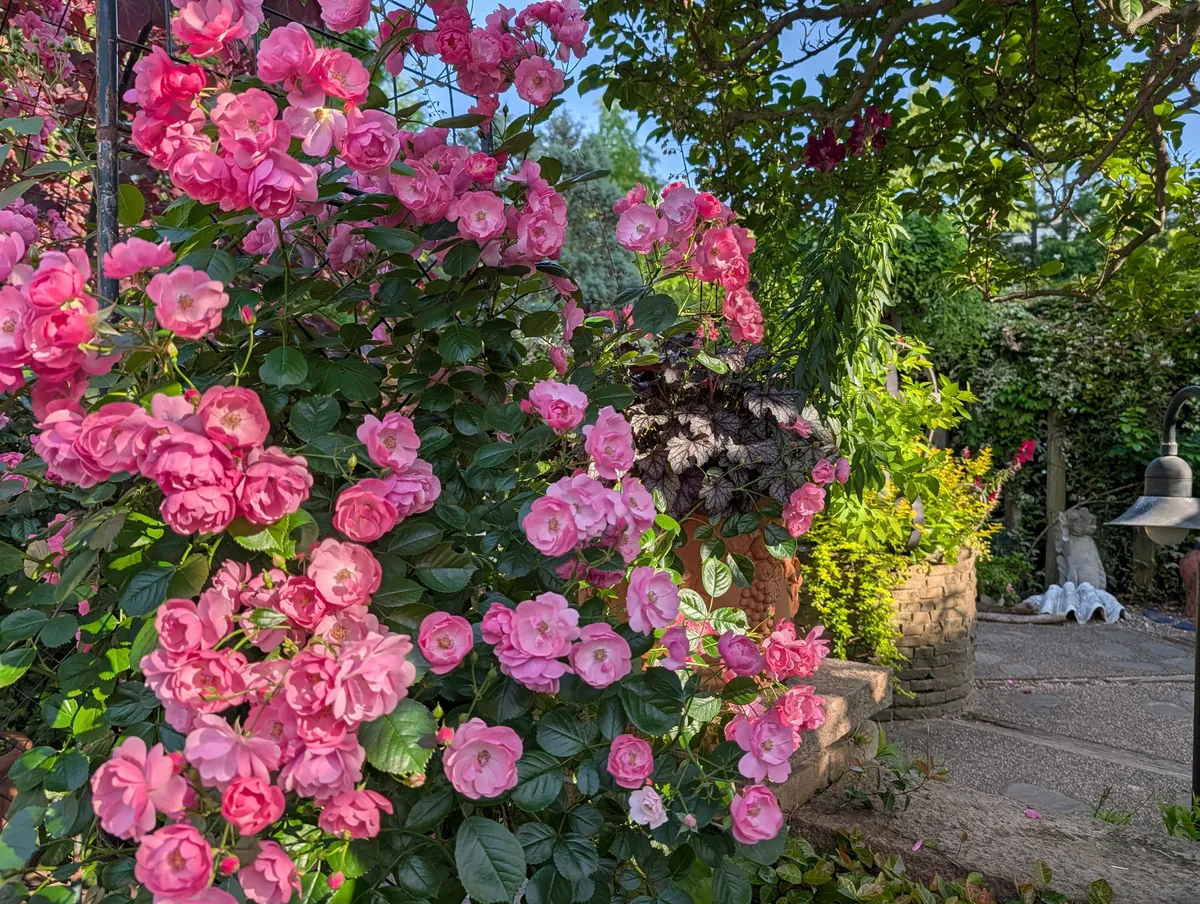
If you only have one reason to visit, make it the roses in mid-May. The garden’s central pathway is framed by a sequence of arches dressed in white, pink, and deep-pink climbing roses. The blooms peak around the second week of May.
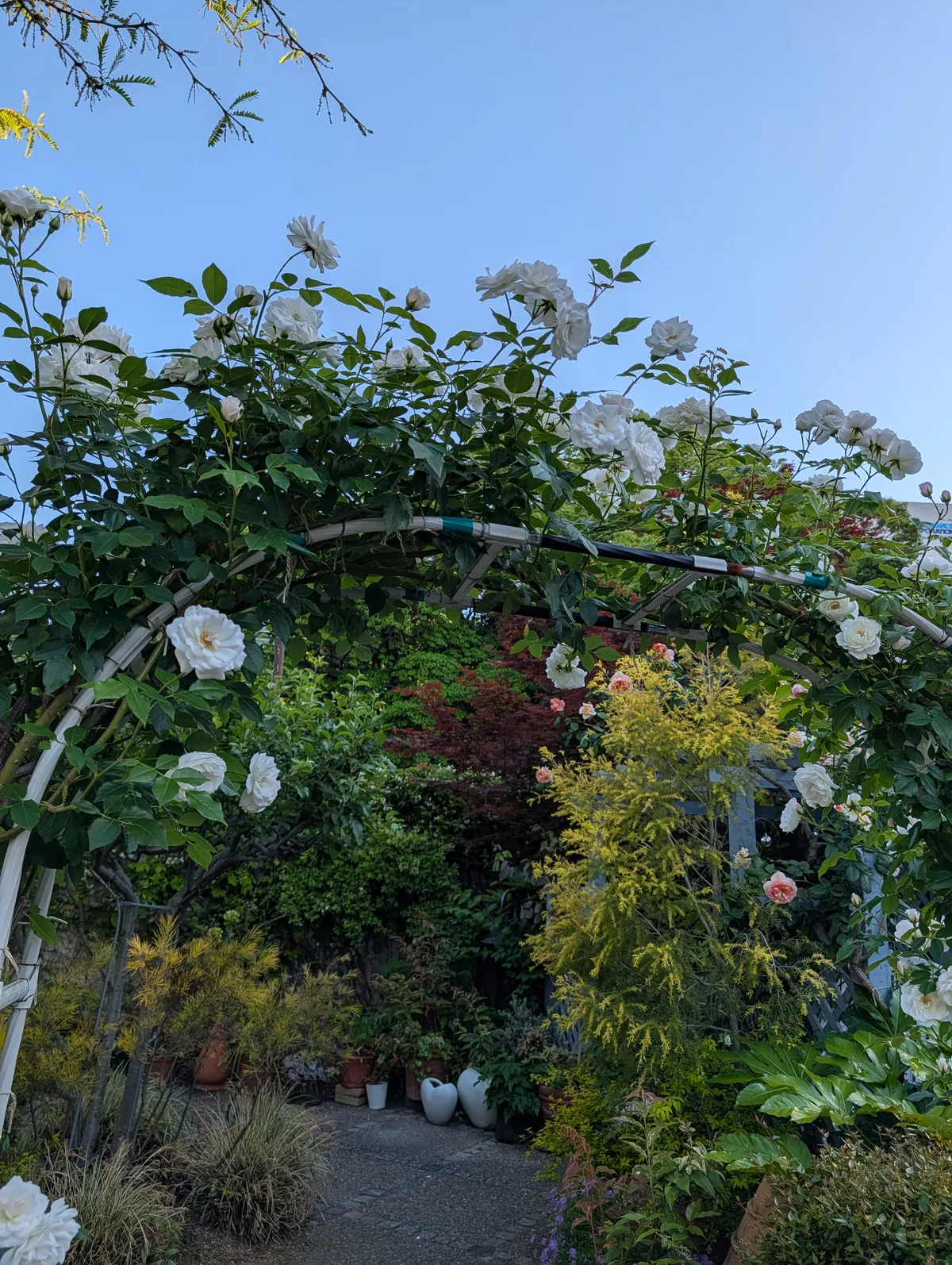
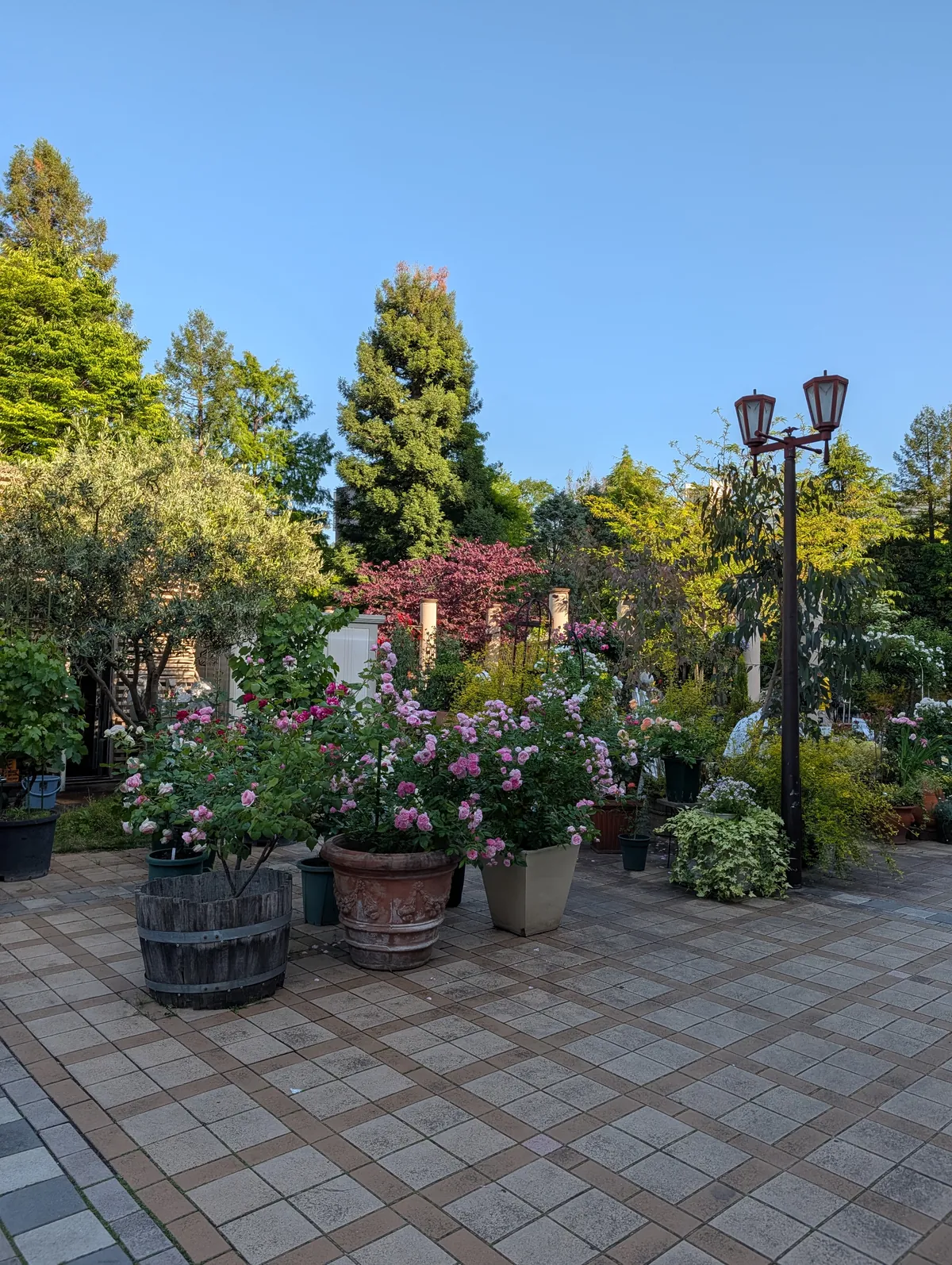
The central plaza is a brick-tiled patio dotted with terracotta pots of roses and herbs. For a free garden, the density and quality of the planting is genuinely surprising.
On my visit at 7 a.m., a fashion-shoot crew was already working under the rose arch — a model, a photographer, and a stylist arranging her hand on a white bloom while the photographer crouched for the angle. The light, the styling, and the pace all read like a brand lookbook rather than a wedding shoot. Catching a glimpse of a working shoot is one of Flarie’s small, unadvertised pleasures. The garden is popular with portrait photographers — both amateurs and professionals — so weekday mornings often have a crew or two. If you are shooting yourself, give other visitors space and avoid blocking pathways.
Other seasons at a glance
- Spring (March–April): tulips, pansies, spring perennials.
- May: peak roses.
- June–July: hydrangeas, herbs, water plants.
- September–October: second-flush roses, perennials, Halloween decor.
- November–December: autumn foliage, winter blooms, Christmas decor.
- January–February: ornamental cabbage arrangements, winter flowers.
If you are visiting in May, prioritize the roses. In November, prioritize the metasequoia and Japanese maple foliage around the pond.
Highlight 2: The Three Courts and the Koi Pond
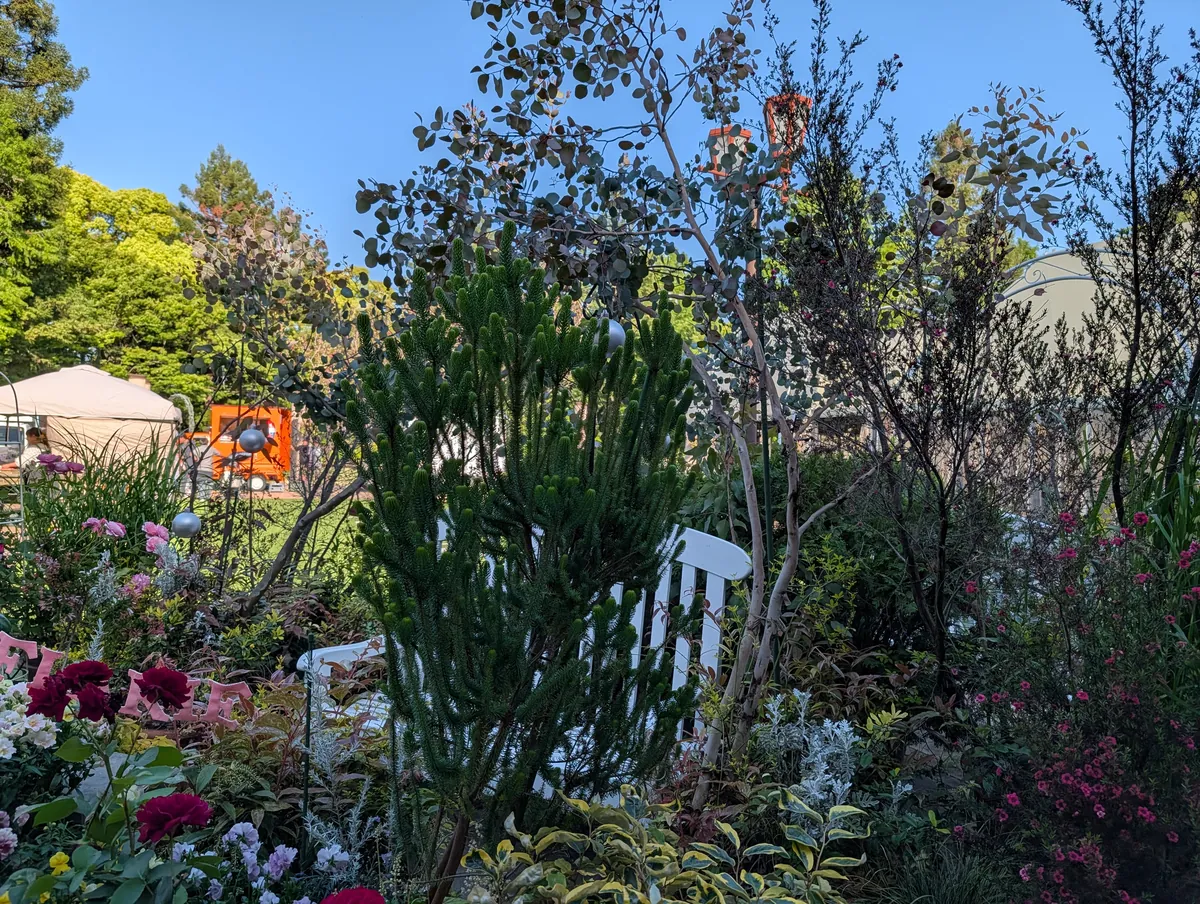
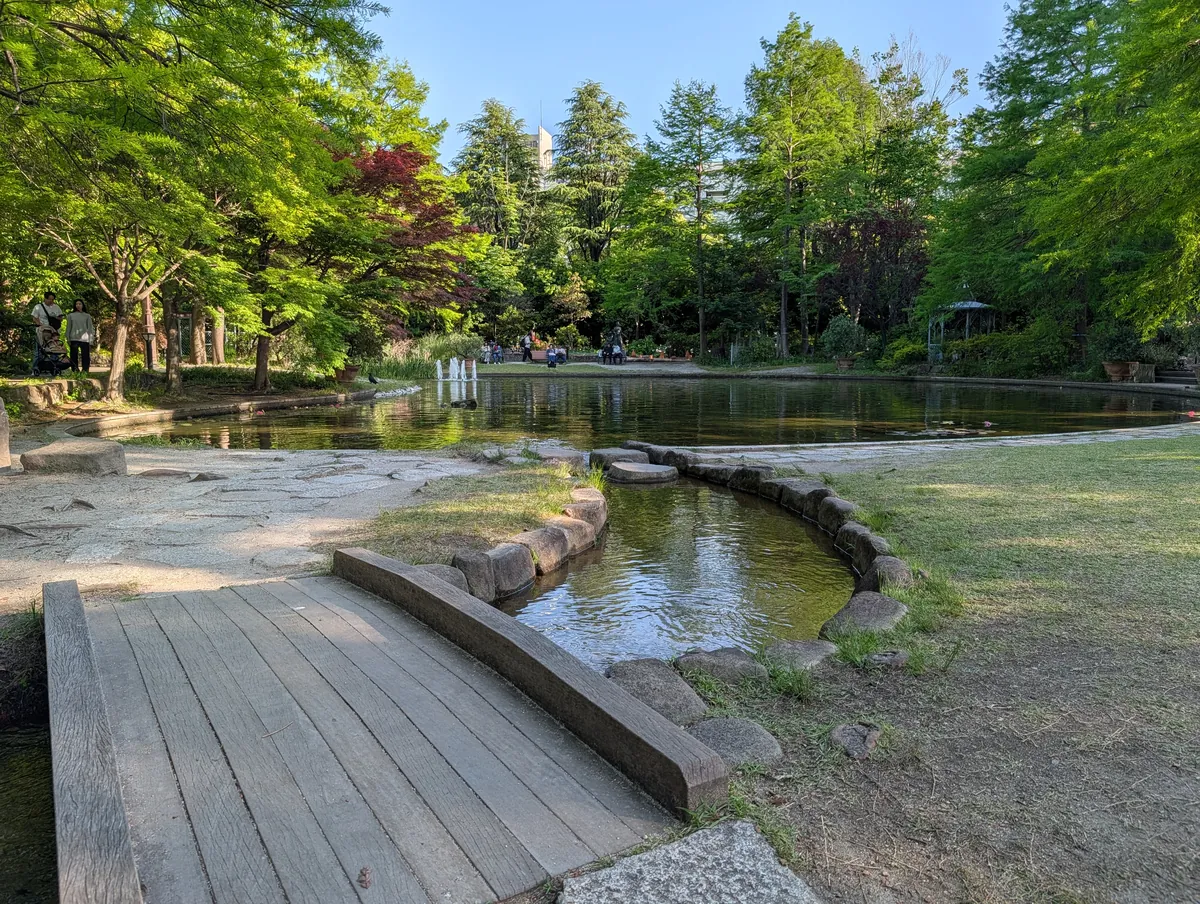
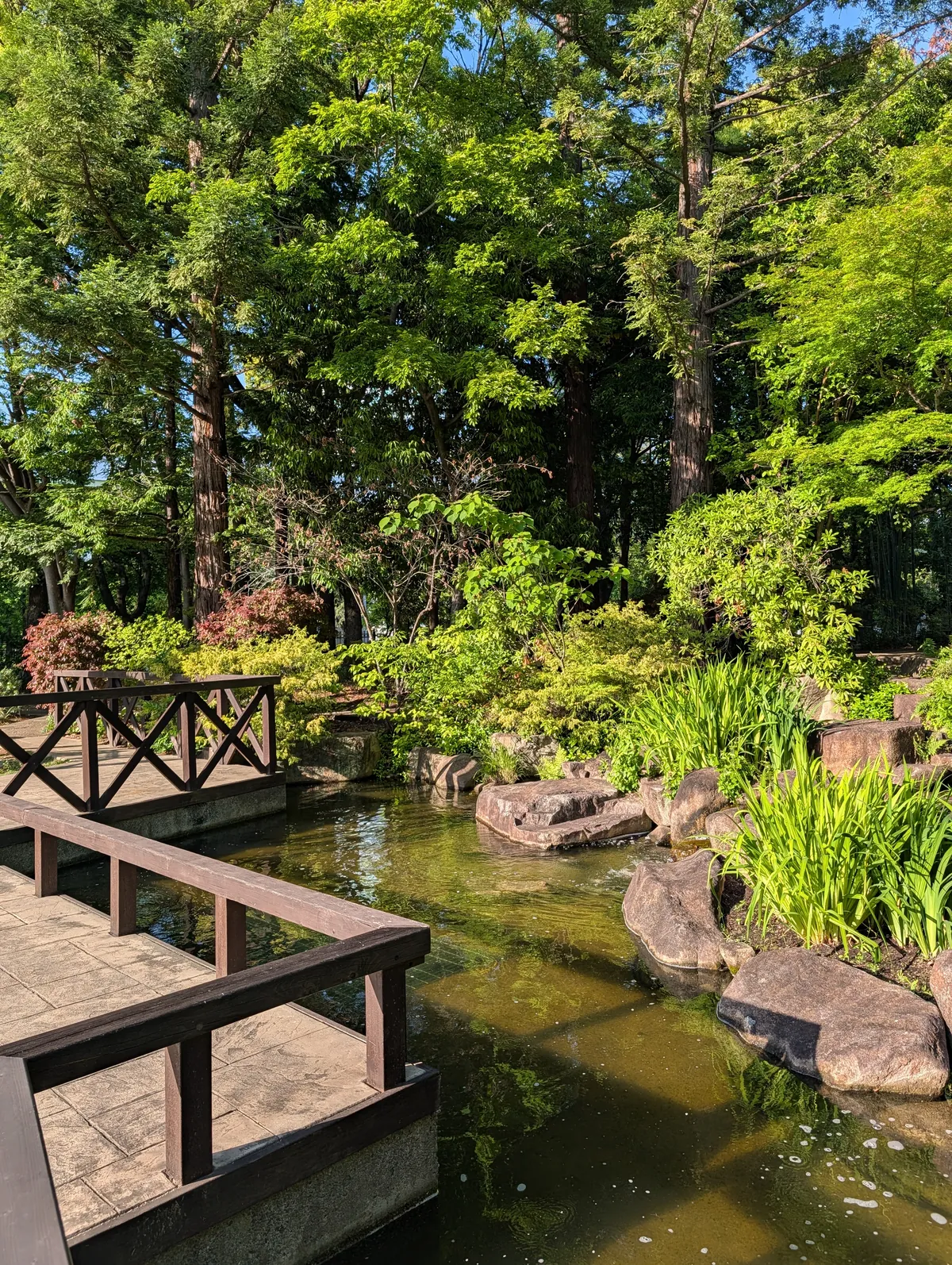
Flarie is laid out around three named courts — Garden Court, Crystal Court, and Glass Court — with the koi pond as the visual heart. You can walk the whole circuit in 20–30 minutes.
The koi pond
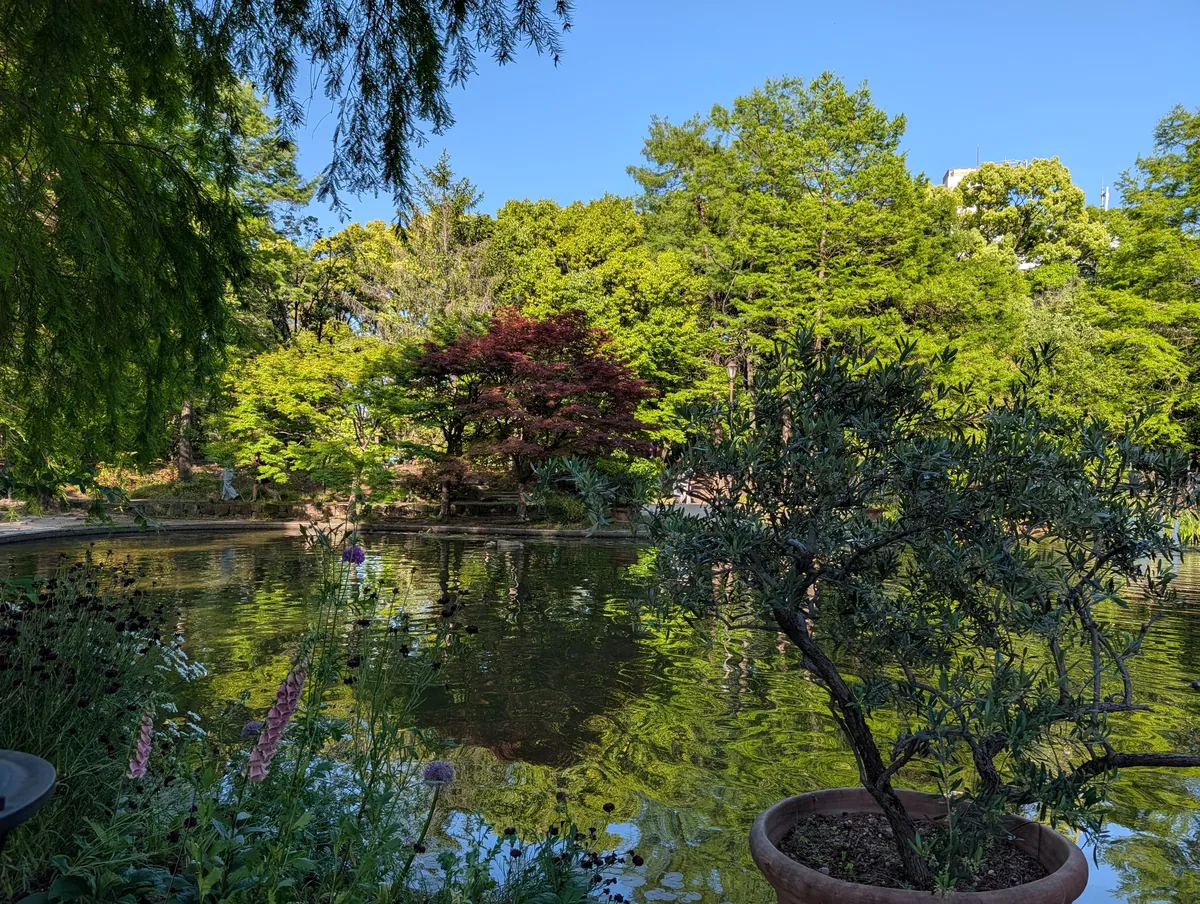
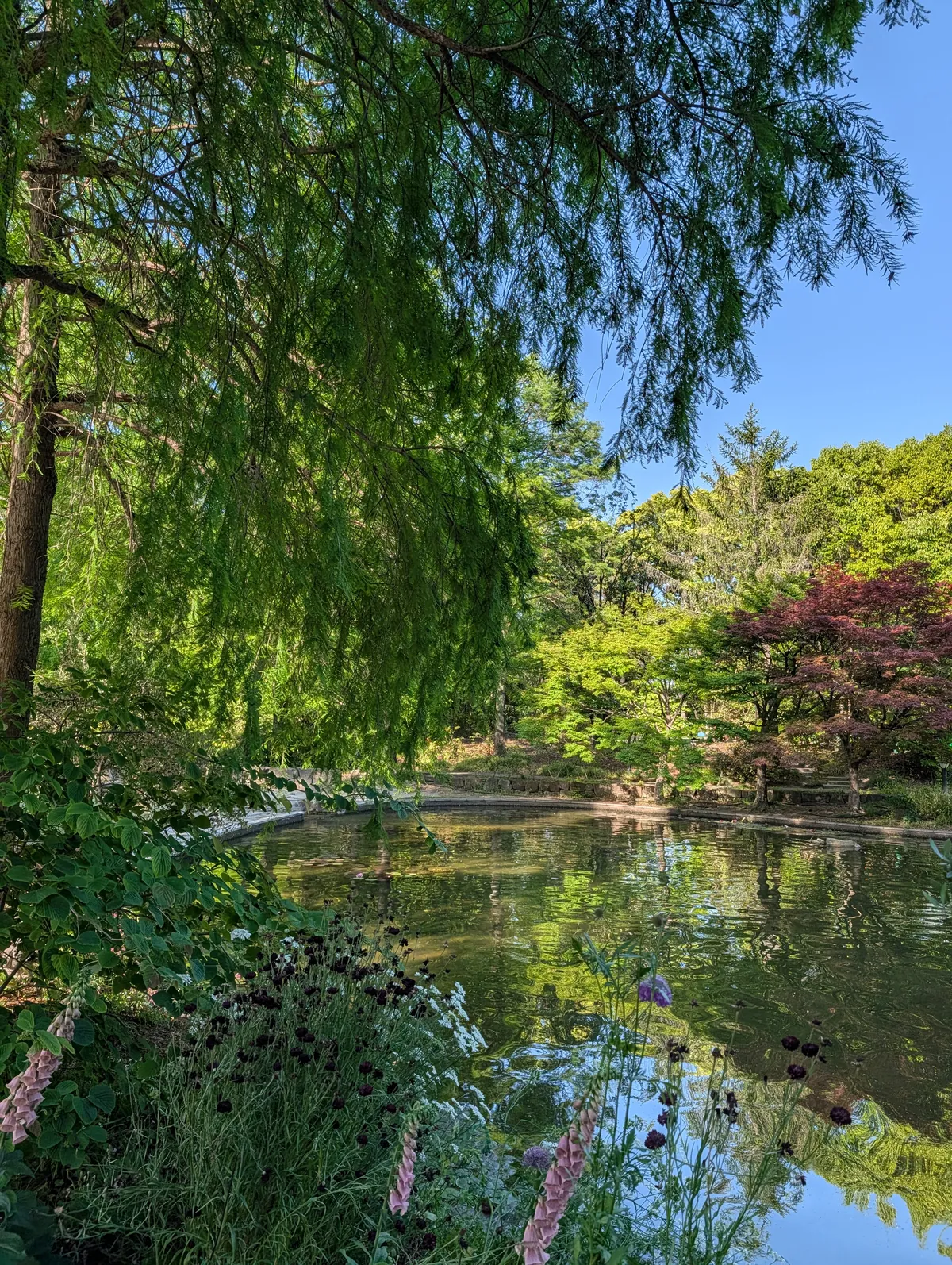
The central pond is the heart of Flarie. Carp drift slowly under the surface, benches line the perimeter, and on most mornings you’ll see dog walkers, a person with a paperback, and a couple of regulars who clearly come every week.
When I visited, a toy poodle was bouncing happily near a bench, and on the far side a large breed dog was lying calmly at its owner’s feet. Dogs of every size are welcome on a leash, and the atmosphere is genuinely dog-friendly. (Always check the entrance signage for current pet rules.)
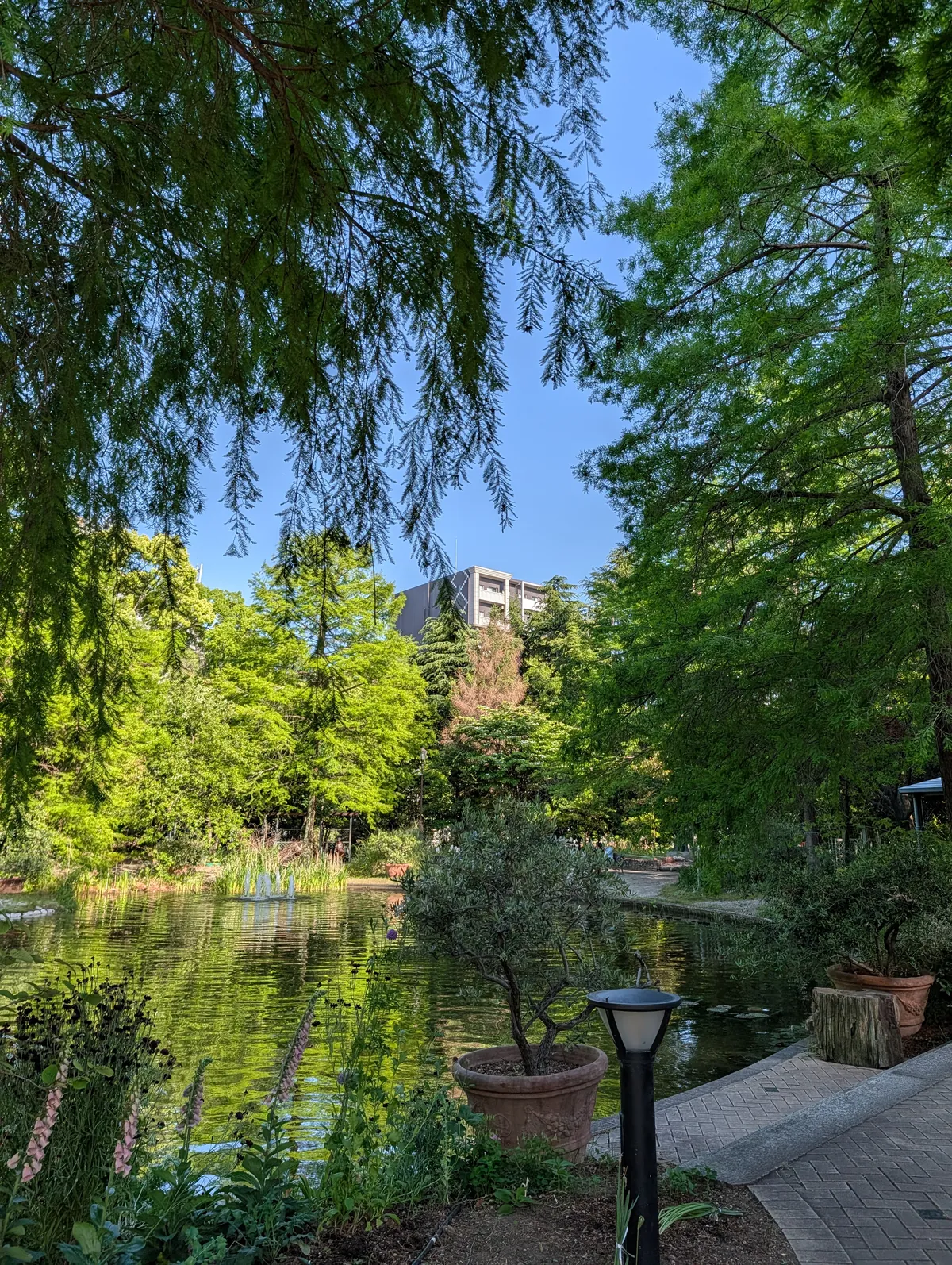
What surprised me most: the floating forest on the pond
Honestly, the moment that stayed with me longest wasn’t the rose arches or the architecture. It was the reflection of the trees floating on the pond.
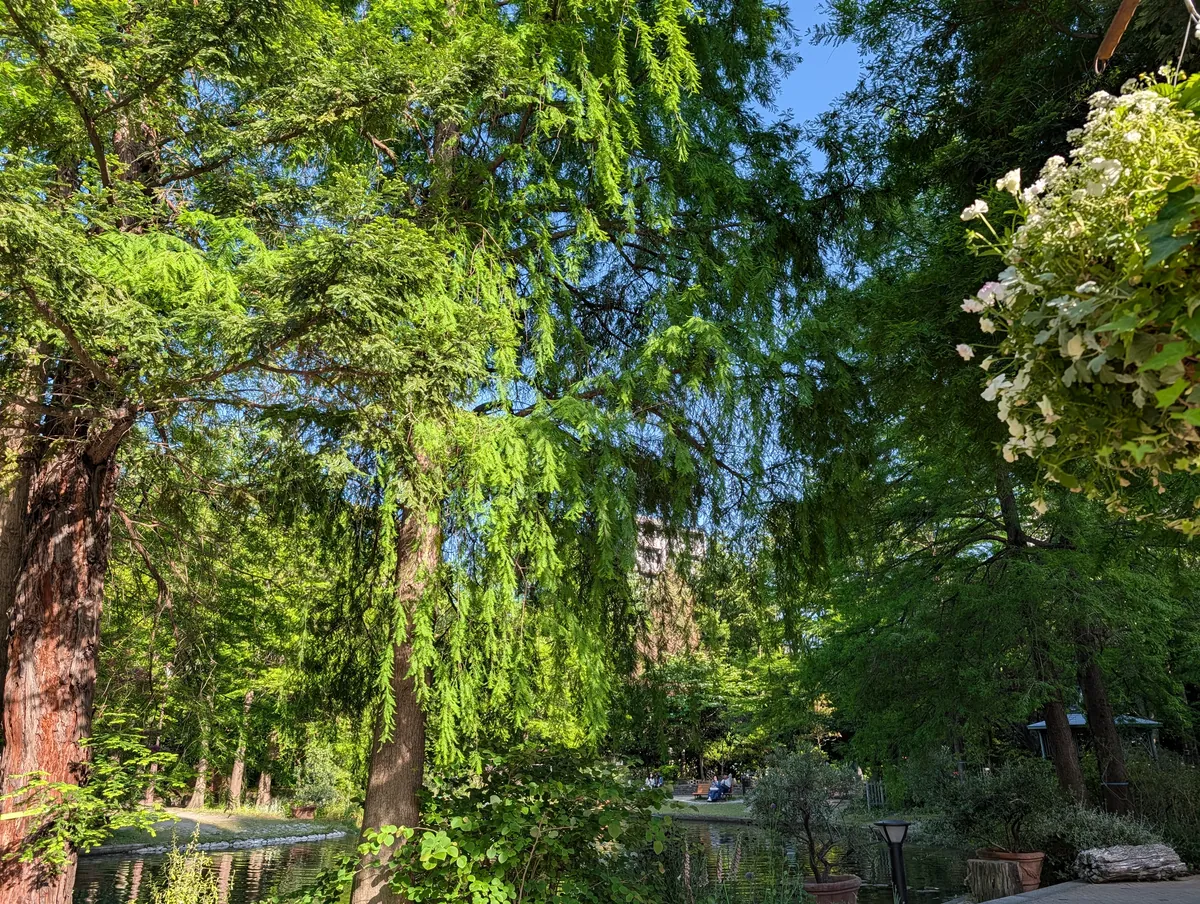
On a windless morning, the surface is almost a perfect mirror. The fine needles of the metasequoia, the red of the maple, the vertical lines of the trunks, and a wedge of blue sky are all painted on the water a second time. It doesn’t feel like a reflection — it feels like a small forest is hanging in the water itself. I sat on a bench with my iced coffee and didn’t move for ten minutes.
When the surface ripples, the floating forest gently distorts. When a koi crosses, the new green scatters into rings. The roses are the showpiece, but in May the richest single image at Flarie is on the surface of that pond. There aren’t many cities where you can find a water mirror like this for free, three minutes from a major subway exit, with no one expecting anything from you.
“Inside the city” is the point
The other thing that makes Flarie work is the surrounding density. Stand at the western edge of the pond and you can see the high-rise residential towers of central Naka. Yet inside the garden, the canopy is full enough that you can hear birds. “A small piece of nature, framed by the city” — that is the whole design intent.
Highlight 3: The Crystal Court and Colonnade
The architectural inheritance from Ran no Yakata is the third reason to visit. Two elements stand out.
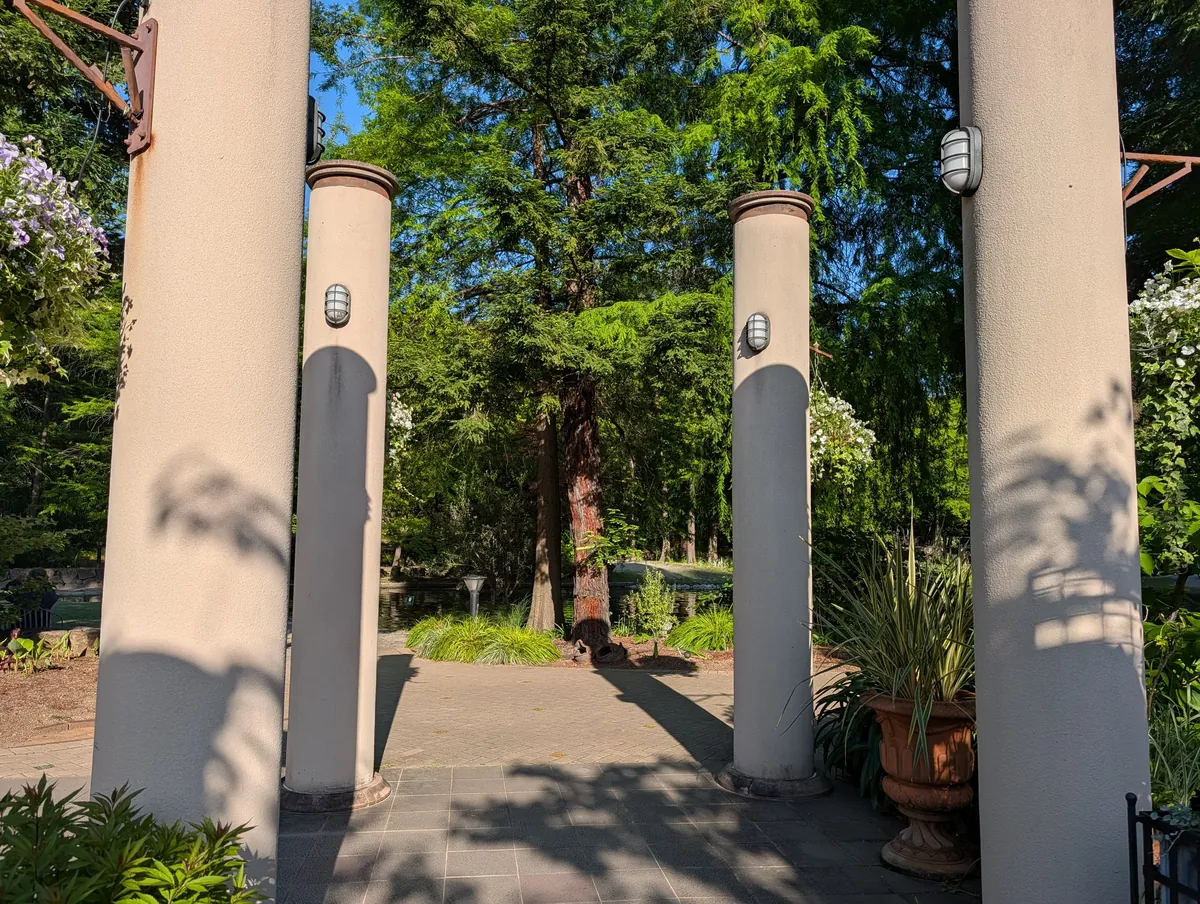
The colonnade frames a row of evenly spaced white round columns that you walk between to reach the rear garden. The light-and-shadow contrast through the columns is at its best in the first hour after opening.
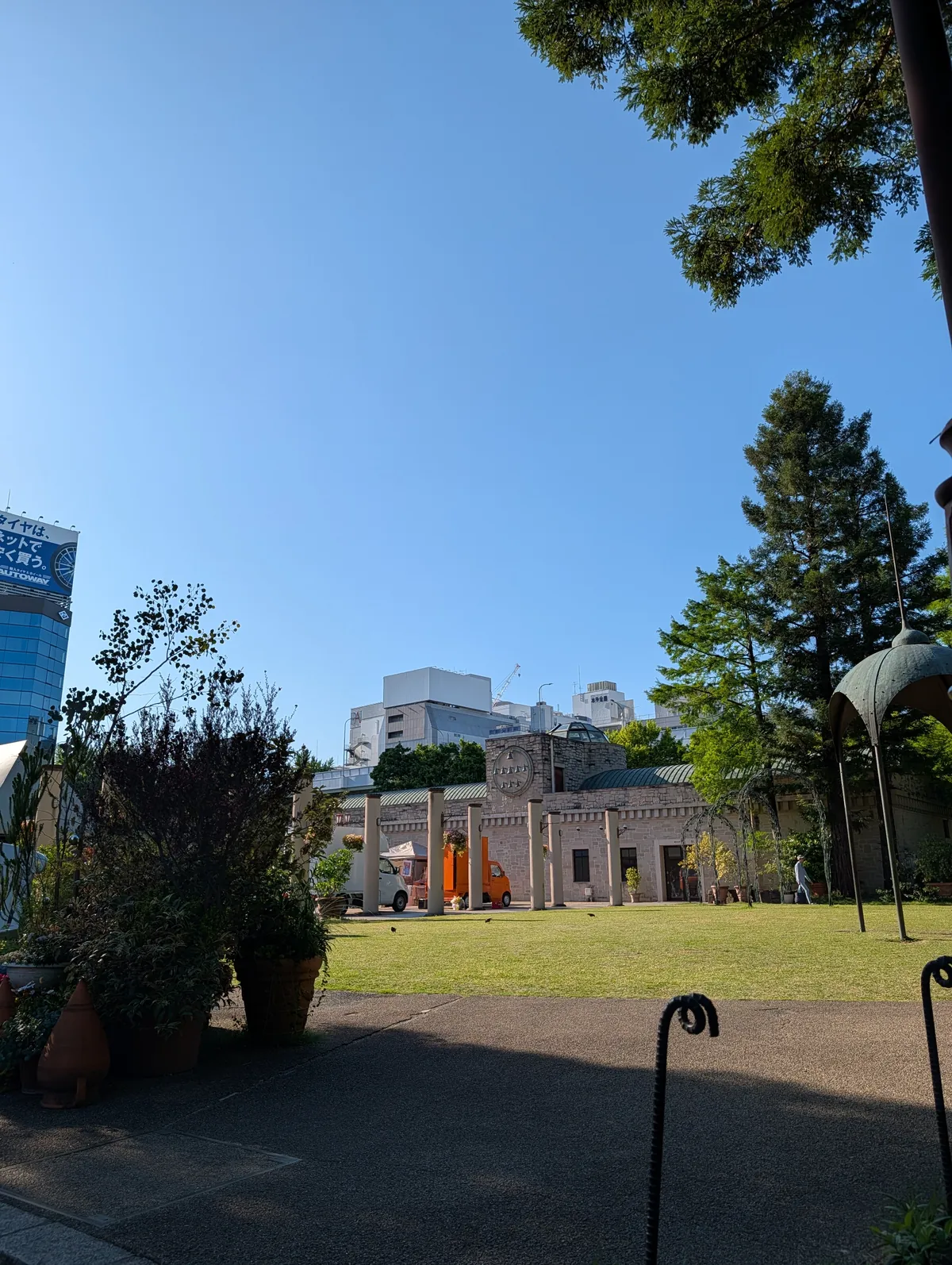
The Crystal Court was, according to Wikipedia, originally designed with London’s Crystal Palace in mind — a glass-roofed indoor pavilion. Today it operates as a wedding venue, so on weekends you may see ceremonies underway. Outside event hours, you are free to admire the exterior; pass-through is sometimes possible inside the building too, except during private events.
Cafes, Restaurants, and Shops Inside Flarie
Flarie hosts the following on-site tenants. Operating hours and closed days vary by tenant; check the official site before visiting.
| Venue | Category | Notes |
|---|---|---|
| CUCINA Pagina (クッチーナ パージナ) | Italian (sit-down) | Lunch course menu. Garden views from the dining room. |
| BRIOCHE Go. (ブリオッシュ ゴー) | Cafe & bakery | Morning sets, pastries, brioche. Genuinely excellent — see below. |
| FLARIE BBQ | Outdoor grill | Seasonal beer-garden style BBQ. |
| green room +f | Florist | Cut flowers and bouquets. |
| green room | Specialty plants | Air plants and succulents. |
Source: Hisaya-odori Garden Flarie — Official Site. Tenant lineup.
BRIOCHE Go. morning set: the local recommendation
For this visit I had brought an iced coffee from Matsuya Coffee in Osu (see below) and didn’t stop in. But on a separate morning, I had the BRIOCHE Go. morning set, and it deserves its own paragraph.
The set is built around a fresh-baked brioche-style plate with coffee, and both the food and the presentation feel a level above a standard Nagoya kissaten morning. It’s the kind of breakfast you book in for when you want a slightly special start to a weekday, or a real reward on a quiet weekend. Within the Sakae / Osu area, BRIOCHE Go. ranks among the most pleasant morning options I know of — “an occasional indulgence at its best.” Highly recommended.
(I have not yet eaten at CUCINA Pagina, so I’ll save commentary on it for a future visit.)
The Local’s Walking Route: Osu → Matsuya Coffee → Flarie
The single best way to experience Flarie is as the quiet half of a longer walk that begins in Osu Shopping Street.
Suggested route (90–120 minutes total)
- Start at Osu Kannon Station (Tsurumai Line) or Kamimaezu Station (Meijo / Tsurumai).
- Wander Osu Shopping Street — Manshouji-dori, Akamon-dori, Honmachi-dori — stopping for whatever street food calls (gyoza, Taiwan ramen, cheese hot dog).
- Stop at Matsuya Coffee Honten (3-30-59 Osu, Naka-ku) for a takeaway iced coffee.
- Walk east along Osu-dori toward Yabacho.
- Arrive at Flarie. Find a bench by the pond and drink the coffee slowly.
About Matsuya Coffee Honten
Matsuya Coffee Honten (松屋コーヒー本店) is a Nagoya coffee institution founded in 1909 (Meiji 42). The flagship store sits in Osu (3-30-59 Osu, Naka-ku), selling house-roasted beans by weight as well as freshly brewed drip and iced coffee to go. A paper cup of cold-pressed dark roast in your hand on a Nagoya summer morning is the kind of small, locally specific pleasure that international visitors rarely find without help.
Source: Matsuya Coffee Official Site. Founding year and main store address.
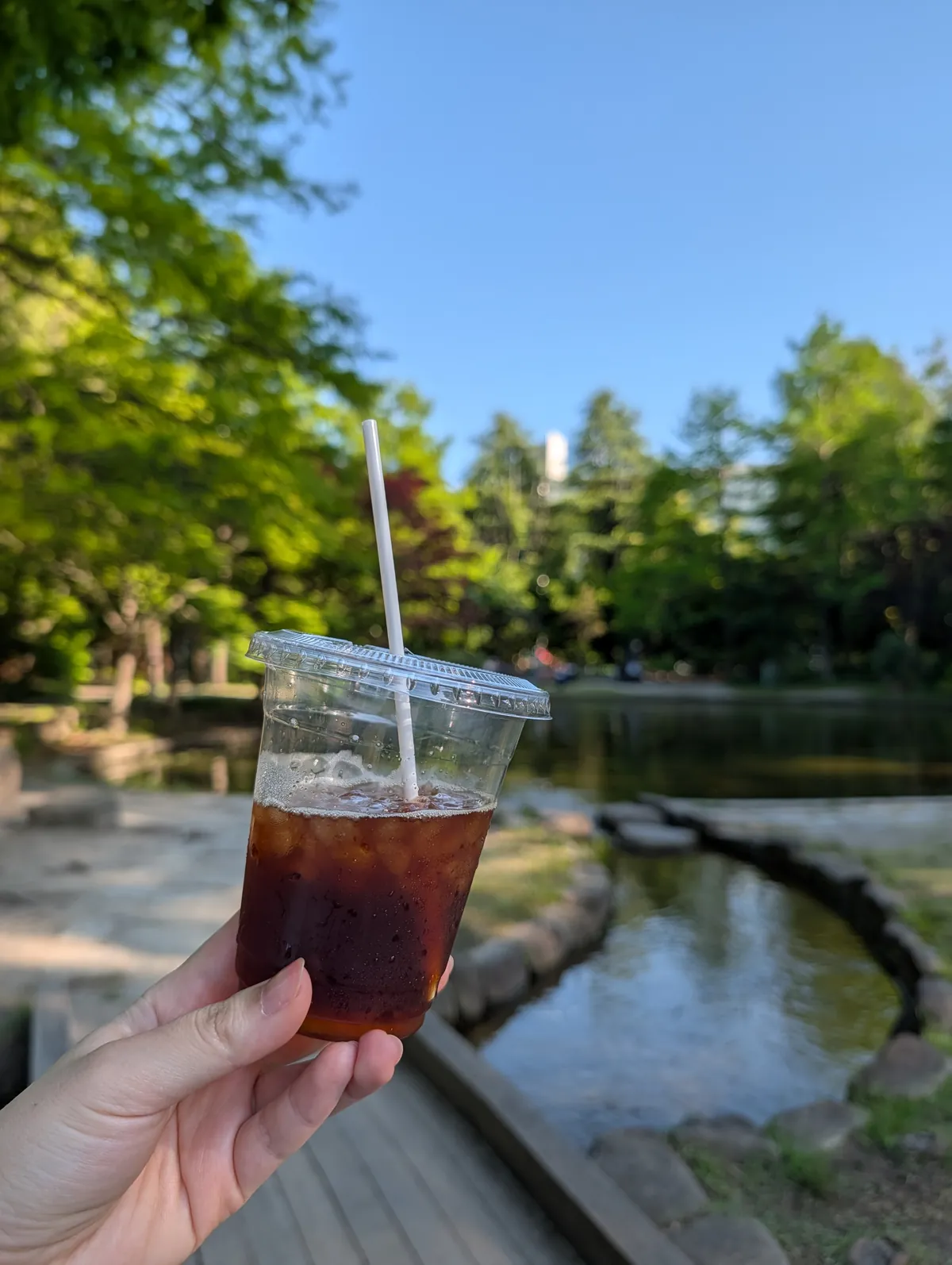
Why this route works
- Osu Shopping Street = energy, density, food, conversation.
- Matsuya Coffee = a 116-year-old Nagoya coffee tradition in your hand.
- Flarie = an abrupt switch into green silence.
The contrast — busy arcade to quiet garden, modern street food to old-world coffee, postwar bustle to Showa elegance — is the experience. It compresses the texture of central Nagoya into about ninety minutes of walking, with Flarie as the calm finale.
You can also reverse it (Flarie first, Osu food crawl as the climax). Start hungry, finish full.
Visitor Tips and FAQ
Q1. Is admission really free?
Yes. There are no tickets, no gates, and no time limits beyond opening hours (09:00–17:30).
Q2. How long should I plan?
20–30 minutes for a basic walk-through. 1–1.5 hours if you want to sit, take photos, or eat at one of the cafes.
Q3. Is Flarie pet-friendly?
Yes, on a leash. Both small and large breeds are commonly seen. Always confirm current rules at the entrance signboard.
Q4. Stroller / wheelchair accessibility?
Main pathways are largely flat. A few rear paths have small steps and gravel. Strollers are generally fine; wheelchair users should call ahead (052-243-0511) for specifics.
Q5. What remains of the old Ran no Yakata?
The architectural shell — the colonnade, the Crystal Court, the wrought-iron gates — is original to the 1998 facility. The orchid focus is gone, but the place still has the bones of a small European-style garden building.
Q6. Worth visiting in the rain?
The Crystal Court and the colonnade are partly covered, so light rain is fine. But the gardens are the main attraction, so dry weather is much better. On a rainy day, lean into Osu’s covered arcade and dining instead, and treat Flarie as an optional five-minute peek.
Q7. Can I take photos?
Personal photography is welcome. For commercial shoots, professional model shoots, or larger gear setups, contact the facility in advance. Avoid blocking pathways with tripods or reflectors.
Q8. Best season?
May (roses) and November (autumn colour) are the standouts. April (tulips) and October (autumn roses) are runners-up. The pond reflection of the metasequoia is beautiful year-round in the first hour after the gates open at 9 a.m.
Q9. Combine with Osu — how much time total?
Plan a half-day (3–4 hours): 1.5–2 hours in Osu, 15 minutes at Matsuya Coffee, 1 hour at Flarie. Add Sakae or Mirai Tower and it becomes a full afternoon.
Q10. Can I watch a wedding?
Crystal Court ceremonies sometimes restrict access to the immediate Crystal Court area. The rest of the garden remains open. If a ceremony is underway, pass through quietly and out of frame.
About the Author
Yuu — born and raised in Nagoya, 35 years in the city, with roots in the Osu and Sakae area going back to childhood visits to Ran no Yakata in the late 1990s. Years of route-mapping the city as a working salesperson, plus a lifetime of walking it on weekends, inform every recommendation. This article is based on an in-person visit on May 10, 2026, with all 17 photographs taken by the author on that morning.