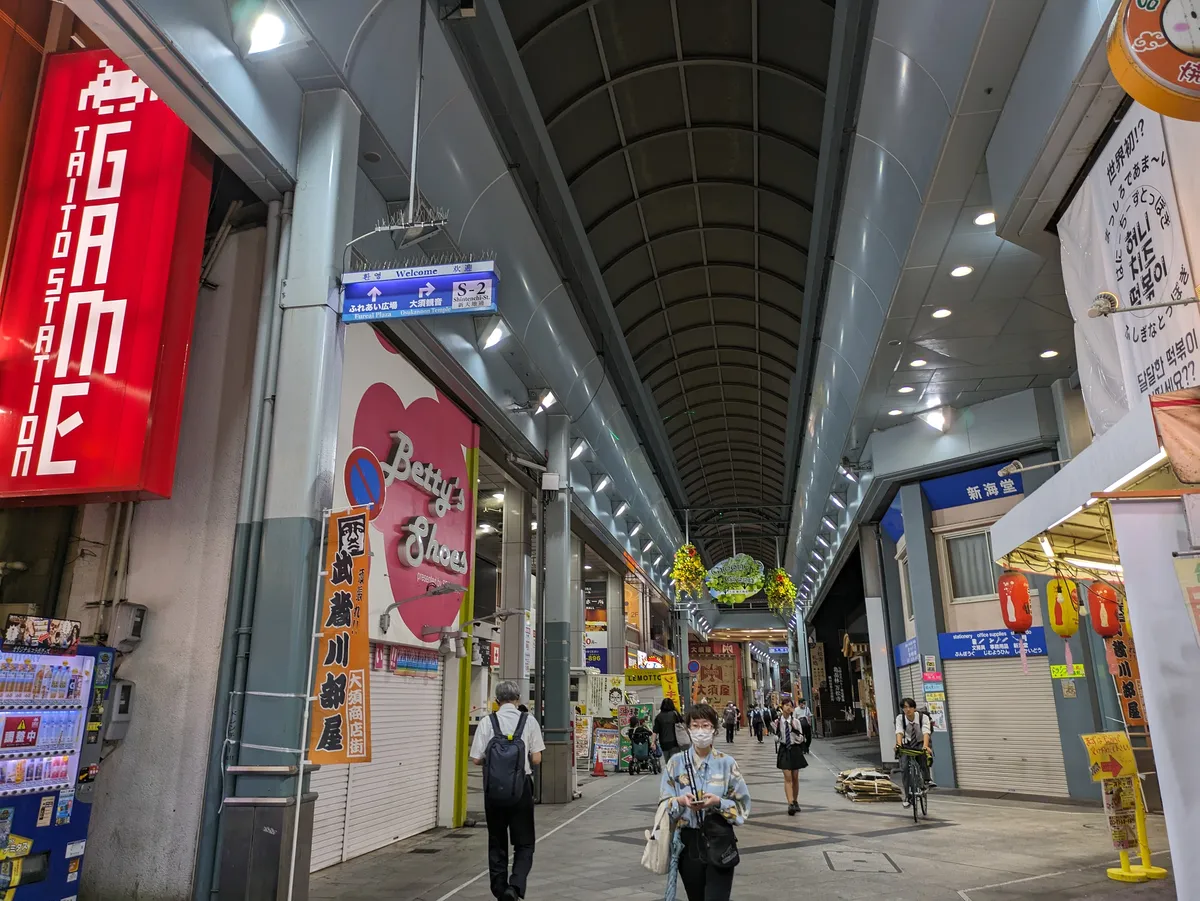

If your travel day in Nagoya turns rainy, the city is unusually well-prepared. Almost every major sight has either a fully indoor option, a covered approach from a subway exit, or a backup attraction within a few minutes’ walk. This guide is written by a 35-year Nagoya local and lists 12 indoor and rain-friendly activities — from the Toyota Commemorative Museum and the Port of Nagoya Aquarium to the city’s two huge underground malls, day spas, the Hommaru Palace at Nagoya Castle, and a covered Osu shopping arcade you can walk end-to-end without an umbrella. We also cover when it actually rains in Nagoya, how to dress for it, and where to grab a 500-yen umbrella if the forecast surprises you.
Last updated: May 2026 | Author: Yuu (born and raised in Nagoya, 35 years local)
This article may contain affiliate links. See our affiliate disclosure for details.
Table of Contents
- When Does It Rain in Nagoya?
- 1. Toyota Commemorative Museum of Industry and Technology
- 2. Port of Nagoya Public Aquarium
- 3. Tokugawa Art Museum
- 4. SCMaglev and Railway Park
- 5. Nagoya City Science Museum
- 6. Osu Shopping Arcade
- 7. Nagoya’s Underground Malls
- 8. Day Spas and Hot Springs Inside the City
- 9. LEGOLAND Discovery Center Nagoya
- 10. Sushi-Making Class or Tea Ceremony
- 11. Cafe Hopping and Nagoya Morning Culture
- 12. Nagoya Castle Hommaru Palace
- Bonus: How to Dress for Nagoya Rain
- Frequently Asked Questions
- About the Author
- Related Guides
When Does It Rain in Nagoya?
Before going into the activities, it helps to know when Nagoya actually gets wet. Travelers often assume Japan is uniformly rainy in the warm months, but Nagoya has fairly clear wet and dry windows across the year — and a rainy day in late January is far less likely than a rainy day in late June.
The three rainy windows: tsuyu, typhoon season, and autumn fronts
Nagoya sits squarely in central Honshu, so it follows the standard mainland Japan pattern. According to the Japan Meteorological Agency, the Tokai region’s rainy season (tsuyu) usually begins around the second week of June and ends around mid-to-late July. During this window, drizzle and steady rain alternate over a period of roughly four to five weeks, often with high humidity and temperatures in the high 20s Celsius.
The second wet window is typhoon season, which runs from late August through early October. Direct hits on the Nagoya area are not annual, but rainfall from passing typhoons and associated autumn fronts can be heavy when it arrives. The third, smaller wet window is the autumn rain front (akisame) in September, which often overlaps with typhoon weather.
Source: Japan Meteorological Agency — Official English Site. Rainy season and typhoon season information for the Tokai region.
Winter is comparatively dry
Winter in Nagoya — December through February — is comparatively dry. Light snow flurries are possible a handful of times per year, but full snow days that disrupt sightseeing are rare in the city center. If you are planning a December or January trip and worried about rain, the statistics are on your side.
What this means for your itinerary
If your dates fall inside the mid-June to mid-July tsuyu window or the September typhoon window, plan two or three indoor anchor activities per day so a sudden downpour does not erase your plans. Outside those windows, treat rainy-day planning as a backup checklist rather than a primary itinerary. For broader seasonal planning, see our complete list of things to do in Nagoya.
1. Toyota Commemorative Museum of Industry and Technology
Best for: Couples, families, engineers, history buffs. Weather-proof rating: completely indoor.
If a Nagoya friend asks me where to go on a rainy day with a visiting guest, the Toyota Commemorative Museum of Industry and Technology (TCMIT) is the first place I name. The entire visit happens inside a preserved red-brick textile mill, so the only outdoor exposure is the three-minute walk from Sako Station — which is almost entirely under shop awnings.

Inside, the live demonstrations are the headline. Real working looms shuttle and weave on a rotating schedule, the Automobile Pavilion runs an animated tour of how an engine block is forged and cast, and a robotic welding arm performs a programmed routine just a few meters from the viewing rail. None of this is video footage — these are full-scale operating machines.
Even on a rainy weekday morning the museum tends to feel quiet rather than crowded, which makes it one of the most pleasant rainy-day picks in the city. Plan two to three hours; engineers and serious car enthusiasts can lose a half day inside.
Affiliate: [KLOOK:nagoya-attraction-pass] for combined museum entry and other Nagoya attractions.
Source: Toyota Commemorative Museum — Official English Site. For the full deep-dive, see our Toyota Commemorative Museum guide.
2. Port of Nagoya Public Aquarium
Best for: Families, couples, kids aged 3 and up. Weather-proof rating: fully indoor exhibits, short outdoor walk from station.
The Port of Nagoya Public Aquarium is one of the largest aquariums in Japan, set on Garden Pier facing Ise Bay. The entire main exhibit route — orcas, belugas, dolphins, the deep-sea hall, the Antarctic exhibit, and the coral reef tanks — is fully indoor and climate-controlled. From Nagoyako Station it is about a five-minute walk along a covered shopping street, so even in a downpour the dash from subway to ticket gate is short.

The dolphin performance pool sits under a high indoor canopy, so the show runs as scheduled regardless of weather outside. A rainy day actually has one practical advantage here: the typically packed Garden Pier walkway empties out, so the route from the station to the entrance is far less crowded than on a sunny weekend.
Plan three to four hours for a relaxed visit including one dolphin performance. Families who want to catch two shows and explore the South Building thoroughly can stretch this to a full day.
Affiliate: [KLOOK:nagoya-aquarium] for discounted advance tickets and skip-the-line entry.
Source: Port of Nagoya Public Aquarium — Official English Site. For the full guide including show schedules and itineraries, see our Port of Nagoya Public Aquarium guide.
3. Tokugawa Art Museum
Best for: Culture-focused travelers, art lovers, Genji Monogatari fans. Weather-proof rating: fully indoor museum and library.
The Tokugawa Art Museum houses the inherited treasures of the Owari Tokugawa family — including the personal possessions of Tokugawa Ieyasu — and counts 9 National Treasures and 59 Important Cultural Properties in its collection. Its centerpiece is the National Treasure “Tale of Genji Picture Scroll”, the oldest surviving illustrated narrative scroll in Japan.

Both the main museum and the adjacent Hosa Bunko library are fully indoor and connected by a short covered walk. The garden next door, Tokugawaen, technically stays open in rain and is quietly beautiful when wet — moss, stone, and maple all gain depth in the soft light — but the indoor museum is the rain-proof anchor here.
The original Genji Picture Scroll is rarely on display because of its fragility (typically once a year, often during a special autumn exhibition), but the museum’s swords, armor, Noh masks, tea utensils, and the reconstructed daimyo audience hall are on permanent rotation and worth the full visit on their own.
Plan 90 minutes to two hours for the museum and Hosa Bunko combined; closer to three hours if you also walk the garden between rain showers.
Source: Tokugawa Art Museum — Official English Site. For the full deep-dive, see our Tokugawa Garden and Art Museum guide.
4. SCMaglev and Railway Park
Best for: Train fans, families, anyone curious about Shinkansen history. Weather-proof rating: fully indoor museum on the Aonami Line.
The SCMaglev and Railway Park (often shortened to “Linear-Tetsudokan”) is JR Central’s official railway museum, and it is one of the strongest indoor picks in the entire city. The exhibition floor is essentially an enormous warehouse holding rows of historic Shinkansen, conventional rail cars, and a real superconducting Maglev test train — all under one indoor roof.
The headline draw for international visitors is the 0-series Shinkansen, the original 1964 bullet train, parked alongside successor models and a 700-series experimental train. There is also a Shinkansen driving simulator (lottery basis) and an N700 conductor simulator, plus one of the largest model railway dioramas in Japan recreating a 24-hour day from Tokyo to Osaka.
From Nagoya Station, take the Aonami Line to Kinjo-futo (the terminus, about 24 minutes). The walk from the station to the museum is around two minutes and partly covered. Plan two to three hours for a relaxed visit; serious rail fans easily spend half a day.
Source: SCMaglev and Railway Park — Official English Site. Operating hours, exhibits, and ticketing.
5. Nagoya City Science Museum
Best for: Families with school-age kids, science enthusiasts, planetarium lovers. Weather-proof rating: fully indoor museum at Fushimi Station.
The Nagoya City Science Museum is built around what its operator describes as one of the world’s largest planetarium domes — a 35-meter inner-diameter sphere that dominates the building from the outside and immerses you in a near-360-degree night sky from the inside. According to the museum’s official site, the projection system uses a hybrid optical and digital setup designed for high-resolution star reproduction.
Beyond the planetarium, the museum has six full floors of life science, earth science, and physics exhibits — including a tornado lab that generates a full-height indoor twister, an artificial aurora dome, and a deep-freeze room kept at minus 30 degrees Celsius (provided cold-weather coats on entry).
From Nagoya Station, take the Higashiyama Line one stop to Fushimi (about 3 minutes), then walk roughly 5 minutes — much of it under arcades and overhead walkways. Plan three to four hours; longer if you secure a planetarium slot, which can sell out on rainy weekend afternoons.
Source: Nagoya City Science Museum — Official English Site. Planetarium specifications and exhibit hall details.
6. Osu Shopping Arcade
Best for: Shoppers, food explorers, vintage hunters. Weather-proof rating: covered arcade, walkable end-to-end without an umbrella.
The Osu Shopping Arcade (Osu Shotengai) is a covered shopping street that stretches across multiple blocks around Osu Kannon Temple. Most of the main shopping route is fully roofed — you can wander between vintage clothing stores, used-electronics shops, anime and manga retailers, taiyaki stalls, and izakaya without ever opening an umbrella.

Osu Kannon Temple itself sits at the western end. The main hall is covered, so even in heavy rain you can pay a visit, light incense, and watch the local pigeon crowd from under the eaves. The neighborhood attracts a younger crowd than most temple districts, and the mix of retro Showa-era shops, Korean-Japanese cafes, and second-hand camera dealers gives Osu an identity unlike anywhere else in central Japan.
From Nagoya Station, take the Tsurumai or Meijo subway lines to Osu Kannon Station or Kamimaezu Station (10 to 12 minutes). Plan two to four hours depending on how deep you go into the side alleys.
For the full neighborhood deep-dive — including specific shops, food stalls, and the monthly antique market — see our Osu shopping street guide.
7. Nagoya’s Underground Malls
Best for: Travelers staying near major stations, last-minute meal planning, gift shopping. Weather-proof rating: literally underground.
One of Nagoya’s quiet superpowers on a rainy day is its two large underground mall networks — one beneath Nagoya Station and one beneath Sakae. Combined, they offer hundreds of restaurants, cafes, fashion stores, drugstores, bookstores, and souvenir shops, all reachable on foot without ever stepping outside.
Under Nagoya Station: Unimall, Gate Walk, ESCA, and Meieki Chika
The Nagoya Station underground network connects the JR ticket gates, the Meitetsu and Kintetsu private rail concourses, and the Subway Higashiyama and Sakuradori lines. Major sub-malls include Unimall (north, toward Kokusai Center), Gate Walk (south, toward JR Gate Tower Mall), ESCA (Shinkansen-side, with Nagoya local food specialty restaurants), and the original Meieki Chika near the Sakuradori exit. You can walk from a hotel near Nagoya Station to a curry udon restaurant, a tonkatsu shop, or a department store-grade gift counter without crossing a single intersection.
Under Sakae: Sakae Chika, Central Park, and Morich
The Sakae underground network, anchored by Sakae Chika and the parallel Central Park mall, runs from Sakae Station all the way to Hisaya-odori, linking up with department stores, the Oasis 21 complex, and the Mitsukoshi and Maruei buildings. On a rainy day this is the most reliable way to combine shopping, eating, and people-watching with zero outdoor exposure.
Affiliate: [BOOKING:hotel-near-nagoya-station] — booking a hotel directly above the underground network is the single biggest weather-proofing decision you can make for a rainy Nagoya trip.
Source: Nagoya Convention and Visitors Bureau — Official Site. Underground mall directory.
8. Day Spas and Hot Springs Inside the City
Best for: Couples, solo travelers, anyone who wants to slow down a rainy afternoon. Weather-proof rating: fully indoor (most baths).
Nagoya has several day-spa-style hot spring complexes within the city limits — large super-sento facilities offering open-air baths, indoor baths, saunas, restaurants, and rest lounges under one roof. They are not traditional rural onsen towns, but they are an excellent rainy-day retreat, especially on a humid late-June afternoon during tsuyu.
The most accessible option for travelers staying near Nagoya Station or Sakae is Canal Resort in Nakagawa Ward, reachable by city bus or a short taxi ride. It includes a high-temperature carbonated bath, several themed indoor pools, multiple sauna rooms, a body-scrub treatment lounge, and a tatami rest area. RAKU SPA GARDEN Nagoya in Moriyama Ward is another large facility with a manga library, hammock loungers, and food court — closer to a Japanese spa-resort experience than a quick onsen dip.
A practical local note: most super-sento facilities require visible tattoos to be covered with skin-tone tape. Compact tape patches are available at convenience stores and at the spa front desk.
Plan two to four hours; a full afternoon-into-evening visit is typical, especially on a rainy day.
Source: Nagoya Convention and Visitors Bureau — Official Site. Day spa and bath facility listings.
9. LEGOLAND Discovery Center Nagoya
Best for: Families with kids aged roughly 3 to 10. Weather-proof rating: fully indoor LEGO attraction.
The standalone outdoor theme park LEGOLAND Japan is largely an outdoor experience, but right next door at Maker’s Pier sits the much smaller, fully indoor LEGOLAND Discovery Center Nagoya. On a rainy day with kids, the Discovery Center is the smarter pick — same brand, same characters, no weather concerns.
The Discovery Center includes themed LEGO build zones, a Miniland area showcasing Japanese landmarks reconstructed from bricks, two short indoor rides, a 4D cinema, and a build-and-test racetrack. It is sized for an afternoon visit (around 2 to 3 hours), which fits perfectly into a rainy half-day plan.
From Nagoya Station, take the Aonami Line to Kinjo-futo (about 24 minutes). The walk from Kinjo-futo Station to Maker’s Pier is roughly five minutes and partly covered. The same day can include the SCMaglev and Railway Park, which is a 10-minute walk on the same Aonami Line stop — both fully indoor, both rain-proof.
Affiliate: [KLOOK:legoland] for advance LEGOLAND Discovery Center Nagoya tickets at international rates.
Source: LEGOLAND Japan and LEGOLAND Discovery Center Nagoya — Official English Site. For the broader LEGOLAND Japan picture, see our LEGOLAND Japan guide.
10. Sushi-Making Class or Tea Ceremony
Best for: Couples, food-curious travelers, cultural travelers. Weather-proof rating: fully indoor private studio.
If your sightseeing day evaporates because of unexpected rain, a small-group sushi-making class or tea ceremony experience is one of the most enjoyable last-minute pivots in central Nagoya. Several studios run two-hour indoor sessions with English-speaking instructors, and same-day or next-day booking is often available through international platforms.
A typical sushi-making class walks you through proper rice seasoning, knife technique on neta (toppings), nigiri shaping, and several maki-roll variations — finishing with a meal of what you made plus miso soup. A tea ceremony experience tends to focus on a shorter sequence (entering the room, receiving the tea, the proper way to drink and admire the bowl) with a wagashi sweet, and runs around 60 to 90 minutes.
Both formats are private, indoor, and immune to weather. A rainy afternoon in Nagoya is, if anything, an ideal time for a tea ceremony — the soft gray light through paper screens is exactly the lighting these rooms were designed for.
Affiliate: [KLOOK:sushi-making-nagoya] for sushi-making experiences with English-speaking chefs.
Affiliate: [KLOOK:tea-ceremony-nagoya] for traditional tea ceremony bookings in central Nagoya.
11. Cafe Hopping and Nagoya Morning Culture
Best for: Slow-travel mornings, solo travelers, couples. Weather-proof rating: indoor cafes, walkable in covered districts.
Nagoya has its own deeply embedded cafe identity, anchored by “morning service” (mōningu) — the long-standing local custom by which cafes include free toast, a boiled egg, and often a small salad with the price of a morning coffee. On a rainy morning, slipping into a kissaten with a thick coffee, buttered toast, and the rain on the window is one of the most pleasant ways to start the day in this city.
The neighborhoods around Sakae, Fushimi, and Imaike have particularly dense cafe coverage. Many sit underground or inside building lobbies, so the walk between two or three cafes can be done with minimal outdoor exposure. Specialty third-wave coffee shops have multiplied across the city in the last decade, sitting alongside the older-style retro kissaten that originated the morning culture.
For a deeper guide to morning service, the etiquette of ordering, and specific shop recommendations, see our Nagoya morning culture guide.
Affiliate: [BOOKING:hotel-sakae] for centrally located Sakae hotels within walking distance of major cafe streets.
12. Nagoya Castle Hommaru Palace
Best for: History travelers, first-time Nagoya visitors. Weather-proof rating: indoor palace; outdoor walk through grounds (umbrella required).
Nagoya Castle is famous for the gold dolphins on its keep, but the rain-proof anchor here is the reconstructed Hommaru Palace — the on-site reconstruction of the original Edo-era palace where the Owari Tokugawa lords received guests and conducted court affairs. The reconstruction was completed in stages between 2013 and 2018, with traditional Japanese carpentry techniques and historical materials, and the result is one of the most beautifully detailed palace interiors open to the public in Japan.
Inside, the palace is fully indoor — sliding doors painted in gold leaf, life-size cedar audience halls, and recreated guest rooms set in soft natural light. On a rainy day the muted light actually flatters the gold leaf, and the palace is far less crowded than on a clear weekend.
The walk between the entrance gate, the palace, and the keep area is outdoor and exposed to rain, but the distances are short (a few minutes between stops) and umbrellas can be borrowed at the main gate during rainy weather. Plan 90 minutes to two hours for the palace and grounds.
Source: Nagoya Castle — Official English Site. Hommaru Palace reconstruction details and visitor information. For the full guide, see our Nagoya Castle complete guide.
Bonus: How to Dress for Nagoya Rain
A few practical local notes that apply across all 12 activities above:
Folding umbrella beats raincoat for tsuyu
During Nagoya’s mid-June to mid-July rainy season, humidity is high and temperatures often sit in the high 20s Celsius. A waterproof raincoat tends to trap heat and become uncomfortably sweaty within ten minutes. A folding umbrella in a daypack is the local standard, and almost every Nagoya resident carries one through tsuyu by reflex.
Convenience-store and 100-yen-shop umbrellas
If a sudden downpour catches you out, every FamilyMart, Lawson, and 7-Eleven in central Nagoya stocks clear plastic umbrellas for around 500 to 800 yen. 100-yen shops such as Daiso (there is a large branch inside Nagoya Station’s underground mall) sell more compact folding umbrellas in the 300-to-700-yen range. Hotel front desks at most major hotels also keep loaner umbrellas — ask at check-in.
Waterproof shoes and bag covers
A pair of waterproof or quick-dry shoes is more useful than a raincoat for a Nagoya rainy day, especially if you are doing the underground-mall-to-museum-to-castle loop. Many bag stores in Nagoya Station’s underground (especially around Gate Walk) sell affordable bag rain covers, useful if you are carrying a fabric backpack with electronics.
Typhoon days are a different conversation
If a typhoon is forecast to make a direct pass, sightseeing decisions become safety decisions. JR lines, Meitetsu, Kintetsu, and the Aonami Line all suspend service in severe weather, and museums and aquariums occasionally close on red-alert days. Check the Japan Meteorological Agency’s English typhoon page the night before, and treat a confirmed direct typhoon hit as a hotel-and-room-service day rather than a sightseeing day.
Frequently Asked Questions
When does it rain the most in Nagoya?
Nagoya’s rainiest period is the East Asian rainy season (tsuyu), which typically runs from mid-June to mid-July. A second wet window comes with the typhoon season in September and early October. Winters from December to February are comparatively dry, so a rainy winter day in Nagoya is much less common than a rainy June afternoon.
Are there enough indoor things to do in Nagoya for a full rainy day?
Yes. Nagoya has multiple fully indoor museums, a major aquarium, two large underground shopping malls under Nagoya Station and Sakae, a covered shopping arcade in Osu, day spas inside the city, and an indoor LEGOLAND Discovery Center. A full one or two-day rainy itinerary is easy to build without ever needing a serious rain plan.
Can I get around Nagoya without getting wet?
To a surprising extent, yes. The subway network connects Nagoya Station, Sakae, and Kanayama directly to underground malls, and many central hotels link straight into those underground passages. Most main museums also sit at or near subway exits, so the actual outdoor walking on a rainy day can be kept to a few minutes.
What is the best rainy-day activity for families with young children?
For ages roughly 3 to 10, LEGOLAND Discovery Center Nagoya inside Maker’s Pier and the Port of Nagoya Public Aquarium are the strongest indoor choices. For mixed ages, the Nagoya City Science Museum’s planetarium and the Toyota Commemorative Museum’s hands-on Technoland zone both work well. All four are entirely indoor.
Where can I buy a cheap umbrella in Nagoya if it suddenly rains?
Convenience stores (FamilyMart, Lawson, 7-Eleven) sell clear plastic umbrellas for around 500 to 800 yen, and 100-yen shops such as Daiso inside Nagoya Station carry compact folding umbrellas. Most large hotels also keep loaner umbrellas at the front desk.
Is Nagoya Castle worth visiting in the rain?
The reconstructed Hommaru Palace is a fully indoor experience that holds up well in rain — the dimmer light actually flatters the gold-leaf interiors. The outer keep, gardens, and stone walls are outdoor, so on a heavy rain day plan to focus on the palace and bring an umbrella for the short walks between gates.
Are Nagoya’s underground malls safe and easy to navigate for foreigners?
Yes. The underground malls beneath Nagoya Station (Unimall, Gate Walk, ESCA) and Sakae (Sakae Chika, Central Park) are well-lit, mapped at every junction, and patrolled. English signage is partial but improving, and Google Maps generally works underground because of strong public Wi-Fi.
Can I do a tea ceremony or sushi-making class on a rainy day?
Yes. Several studios in central Nagoya run small-group tea ceremony and sushi-making experiences in private indoor spaces, with English-speaking instructors. Booking platforms such as Klook list pre-paid options that can be reserved on the day or the night before — a useful fallback when the weather forecast shifts.
About the Author
Yuu — Born and raised in Nagoya for 35 years. Lifelong central Japan local. Has lived through more than five tsuyu rainy seasons in central Nagoya and built a personal rainy-day playbook over the years. Writes practical, source-checked travel guides to Aichi and central Japan.
Read more about Yuu and Japanese Festival.
Related Guides
- Things to Do in Nagoya — Complete Local’s Guide
- Toyota Commemorative Museum: A Local’s Guide
- Port of Nagoya Public Aquarium: Complete Guide
- Tokugawa Garden and Art Museum Guide
- Osu Shopping Street Guide
- LEGOLAND Japan Guide
- Nagoya Morning Culture Guide
- Nagoya Castle Complete Guide
Affiliate disclosure: This article contains affiliate links to Klook and Booking.com. We may earn a small commission at no extra cost to you when you book through these links. See our affiliate disclosure policy for details.